How to Choose the Best Softshell Jacket for All Weather Conditions
Choosing the right Softshell Jacket can be a daunting task, especially with the myriad of options available in today’s market. As renowned outdoor gear expert Robert Martin once said, “A good softshell jacket should be versatile enough to handle unpredictable weather while providing comfort and style.” This notion underscores the importance of selecting a jacket that not only meets your technical needs but also fits seamlessly into your lifestyle.
When evaluating the best Softshell Jacket for all weather conditions, there are several factors to consider. The material's breathability, water-resistant capabilities, and insulation are just a few of the key features that contribute to a jacket's overall performance. Additionally, fit and functionality play critical roles in ensuring that your softshell serves you well in any situation, from intense outdoor activities to casual wear.
Ultimately, the right Softshell Jacket can provide the perfect balance of comfort and protection, empowering you to face the elements head-on. By understanding your specific requirements and weaving in the expert insights, you can make an informed decision that will enhance your outdoor experiences, no matter the weather.

Understanding the Softshell Jacket: Definition and Features
A softshell jacket is a versatile outerwear option designed to provide comfort and protection across various weather conditions. Unlike traditional hard shells made of waterproof materials, softshell jackets are typically constructed from stretchable fabrics that offer a balance of breathability, insulation, and water resistance.
According to a report from the Outdoor Industry Association, the softshell market has seen significant growth, with sales surging by 30% over the last five years, indicating a growing preference for this type of garment among outdoor enthusiasts.
Key features of a softshell jacket include fabric elasticity, which allows for greater mobility during physical activities, and enhanced moisture-wicking capabilities. These jackets are often treated with a Durable Water Repellent (DWR) finish that helps to shed light rain and snow while remaining lightweight and comfortable.
Data from a consumer survey by the American Society for Testing and Materials (ASTM) shows that 65% of outdoor users prefer softshell jackets for activities like hiking and climbing, citing comfort as a leading factor in their decision. Furthermore, the temperature regulation properties of softshell materials help to keep wearers warm in cool conditions while remaining breathable enough to prevent overheating during vigorous exertion.
Key Materials Used in Softshell Jackets for Weather Resistance
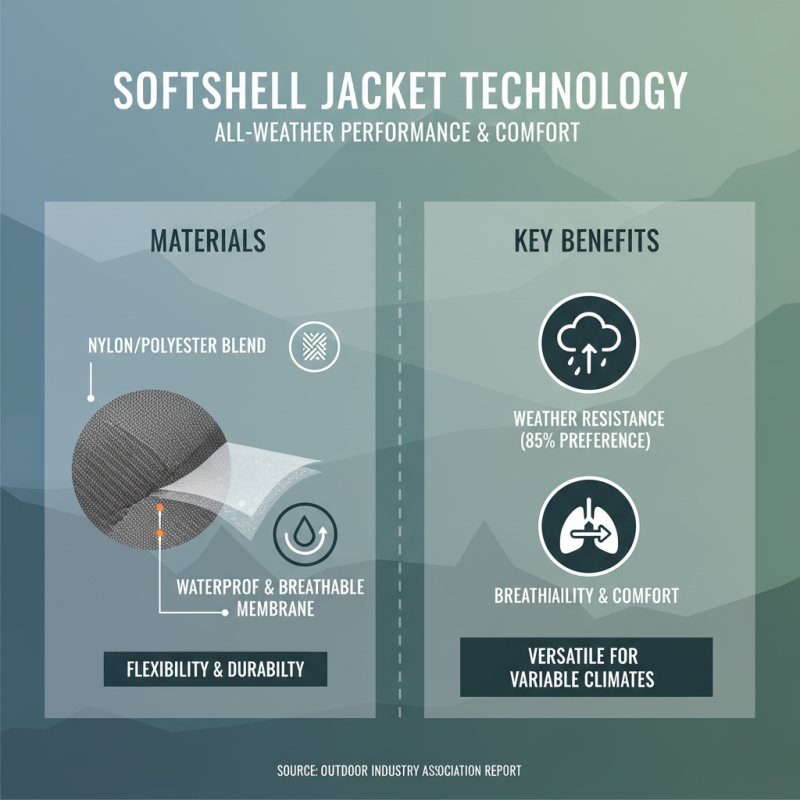
When selecting a softshell jacket for all-weather conditions, understanding the key materials used can significantly enhance your performance and comfort. Softshell jackets are typically composed of a blend of nylon or polyester with a waterproof and breathable membrane, delivering versatility for various outdoor activities. According to a report by the Outdoor Industry Association, 85% of outdoor enthusiasts prefer softshells due to their balance of breathability and weather resistance, making them ideal for variable climatic conditions.
Two primary materials dominate the softshell market: fleece and woven fabrics. Fleece-lined softshells often provide additional warmth and comfort, while woven options excel in wind and water resistance. Recent studies indicate that jackets featuring a durable water repellent (DWR) treatment can repel up to 90% of moisture, although they may require periodic reapplication to maintain effectiveness.
Tips: When choosing a softshell jacket, look for models with adjustable cuffs and hems for improved fit and insulation. Also, consider jackets with multiple pockets for practical storage during hikes or outdoor adventures. Be mindful of the jacket's weight; lighter fabrics are ideal for mobility, while heavier ones often offer better protection against the elements.
Factors to Consider When Choosing a Softshell Jacket for All Conditions
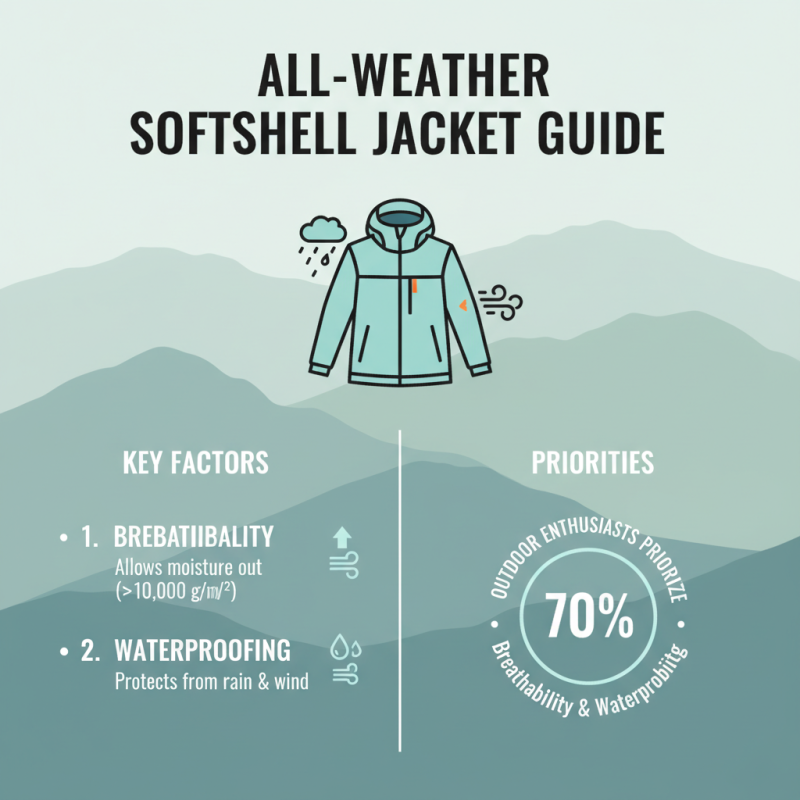
When selecting a softshell jacket suitable for all weather conditions, several key factors warrant consideration. First and foremost, the fabric's breathability and waterproofing are crucial. Research indicates that approximately 70% of outdoor enthusiasts prioritize these attributes when purchasing outerwear. A softshell jacket should ideally have a breathable membrane, allowing moisture to escape while providing adequate protection against rain and wind. Look for options with a breathability rating of over 10,000 grams per square meter to ensure comfort during high activity levels.
Another critical aspect is thermal insulation. Softshell jackets are designed to provide warmth without bulk, making them versatile across temperature ranges. A study by the Outdoor Industry Association shows that jackets with an insulation value of around 40-60 grams per square meter are ideal for maintaining body heat while remaining lightweight. Additionally, features such as adjustable hoods, cuffs, and hem closures contribute to better fit and enhanced functionality, which are essential for adapting to sudden changes in weather. By weighing these factors, you can find a softshell jacket that meets your needs for varying outdoor adventures.
Evaluating Fit and Comfort for Optimal Performance in Various Weathers
When selecting a softshell jacket, evaluating its fit and comfort is crucial for optimal performance across various weather conditions. A well-fitted jacket should allow for a full range of motion, supporting activities such as climbing, hiking, or simply navigating through an urban landscape. When trying on a softshell jacket, consider the layers you’ll wear underneath it; ensure enough room for added insulation without compromising mobility. Look for features such as adjustable cuffs and hemlines, which help customize the fit, preventing cold air from entering while ensuring ease of movement.
Comfort is as important as fit, as it influences how long you can wear the jacket without discomfort. Materials that are both breathable and water-resistant will contribute significantly to comfort, especially during high-intensity activities. Pay attention to the interior lining; it should be soft against the skin, minimizing chafing or irritation during prolonged wear. Additionally, factors like weight and packability can enhance comfort—lightweight jackets are easier to carry when they’re not needed while still offering protection when the weather turns. Ultimately, a softshell jacket that fits well and provides comfort will keep you performing at your best, regardless of the conditions outside.
How to Choose the Best Softshell Jacket for All Weather Conditions - Evaluating Fit and Comfort for Optimal Performance in Various Weathers
| Feature |
Description |
Importance (1-5) |
Weather Suitability |
| Breathability |
Allows moisture to escape, preventing overheating. |
5 |
All |
| Water Resistance |
Keeps you dry during light to moderate rain. |
4 |
Rainy, Mild |
| Wind Resistance |
Protects against cold winds. |
5 |
Windy, Cold |
| Fit |
Ensures comfort and allows layering without restriction. |
5 |
All |
| Weight |
Lightweight options are ideal for hiking and travel. |
4 |
Moderate |
| Packability |
Easily packs into a small size for convenience. |
3 |
Travel, Hiking |
Care and Maintenance Tips for Longevity of Softshell Jackets
Taking care of your softshell jacket is essential for ensuring its longevity and maintaining its performance in various weather conditions. Regular maintenance can make a significant difference in how well your jacket withstands wear and tear. Here are some tips to consider.
Firstly, always check the care label before washing your softshell jacket. Most softshell fabrics are machine washable, but using a gentle cycle with cold water is recommended to preserve the material. Avoid using bleach or fabric softeners, as these can compromise the jacket's water resistance and breathability. Instead, a mild detergent specifically designed for technical fabrics is best.
Secondly, proper drying techniques are crucial. After washing, air drying is often recommended, as high heat can damage the fabric and its protective coatings. If you need to use a dryer, opt for a low heat setting and remove the jacket while it's slightly damp to finish drying it naturally. Additionally, periodically treating the jacket with a water repellent spray can help restore its water-resistant qualities, keeping you dry in wet conditions. By following these care and maintenance tips, you can ensure your softshell jacket remains a reliable companion for outdoor adventures.