Leave Your Message
A Women's Jacket can change the feel of an outfit in seconds. Picture a cropped denim layer over a cotton dress, or a long wool coat against a cold morning. Yet choosing well means looking beyond appearance. Fabric, fit, warmth, movement, and intended use all matter. The names can blur, too. A shacket may sit between a shirt and a jacket, while a blazer can be tailored or relaxed.
Industry data offers useful context, but not a direct ranking of jacket styles. ThredUp’s 2024 Resale Report, prepared with GlobalData, found that the U.S. secondhand apparel market grew 11% in 2023. That growth makes durability and repeat wear worth considering when comparing jackets. McKinsey and The Business of Fashion’s State of Fashion 2025 describes a cautious outlook for the wider fashion market. Neither report measures women’s jacket preferences specifically. That distinction matters.
Fashion consultant and educator Tim Gunn is known for the practical refrain, “Make it work.” For jackets, that means asking whether a piece works with real routines, not just a styled photograph. This guide explores familiar options, including denim, leather, bomber, puffer, trench, blazer, and utility jackets. It will compare their silhouettes, materials, layering potential, and typical uses. A category label is only a starting point. Personal comfort still deserves more weight than a trend forecast.
What Are the Different Types of Women's Jackets?
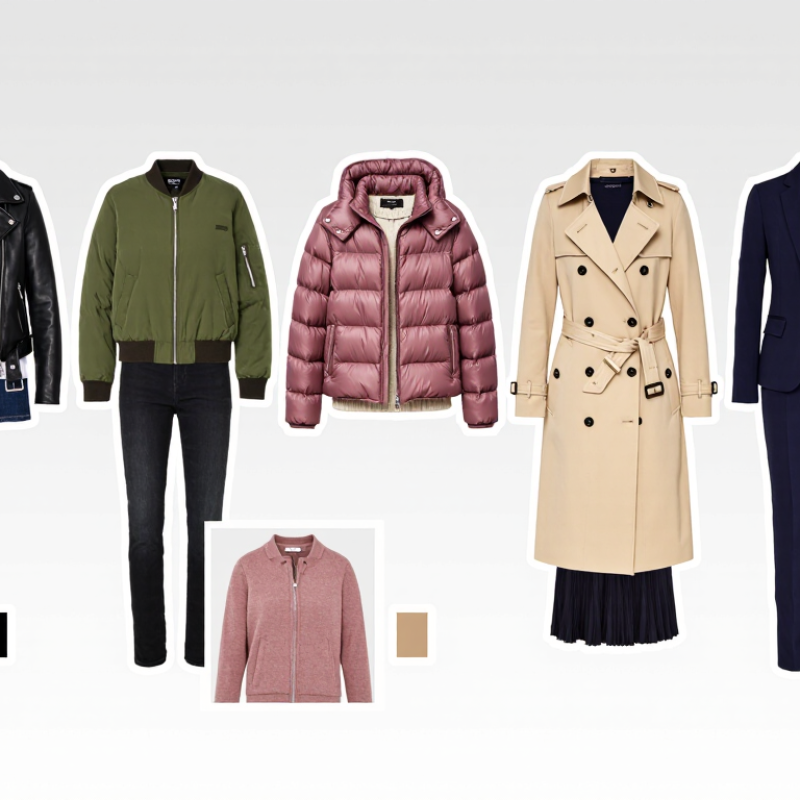
Women’s jackets are often classified by style and purpose, and the two categories overlap. A denim jacket, for example, may be a casual layer or a light cover for a breezy evening. These labels are useful, but not perfectly tidy.
By style, common choices include blazers, bomber jackets, denim jackets, leather jackets, and trench coats. A blazer has a structured shape that works well over a shirt or dress. Bomber jackets usually have ribbed cuffs and a relaxed fit. Denim and leather styles add texture, while trench coats offer a longer, more polished silhouette. Details matter: shoulder seams, lining, and room for a sweater can change how a jacket feels.
Purpose helps narrow the choice. Lightweight windbreakers suit mild, changeable weather, while insulated jackets trap warmth on cold days. Rain jackets are designed to shed water, though a water-resistant finish may not handle prolonged rain. For commuting, pockets and easy movement can matter more than a sharp shape. For formal settings, a blazer may be more useful than a bulky layer. A common mistake is choosing by appearance alone. Fit changes with what you wear underneath. Try it with a real outfit.
| Jacket Type | Typical Style Features | Common Materials | Primary Purpose | Typical Conditions |
|---|---|---|---|---|
| Blazer | Structured shoulders, lapels, and a button-front design; may be tailored or relaxed. | Wool, cotton, linen, polyester blends | Smart-casual, professional, or formal layering | Mild to cool weather; often worn indoors or as a light outer layer |
| Denim Jacket | Typically waist-length with a collar, front buttons, and chest pockets. | Cotton denim, sometimes with a small amount of stretch fiber | Casual everyday wear and transitional layering | Mild weather; generally not designed for heavy rain or severe cold |
| Leather Jacket | Often features a zip or button closure; cuts range from fitted to relaxed. | Leather or leather alternatives | Casual styling and wind-resistant outer layering | Cool, dry conditions; warmth varies with lining and construction |
| Bomber Jacket | Short body, front zip, and ribbed cuffs and hem are common features. | Nylon, polyester, cotton, leather, or mixed fabrics | Casual wear and lightweight protection from breezes | Mild to cool weather, depending on insulation |
| Trench Coat | Usually longer than a hip-length jacket, with a belt, lapels, and a storm flap. | Cotton gabardine, cotton blends, or water-resistant woven fabrics | Rain protection and polished transitional layering | Rainy, mild weather; not usually intended for deep cold |
| Rain Jacket | Lightweight shell, often with a hood and closures designed to limit water entry. | Coated or laminated synthetic fabrics | Keeping rain and wind off the body | Wet conditions; breathability and waterproofing vary by design |
| Windbreaker | Light shell with a front closure; may include a hood and elasticated cuffs. | Lightweight nylon or polyester | Reducing wind exposure during everyday activities or exercise | Windy, mild conditions; usually offers limited insulation |
| Fleece Jacket | Soft, insulating fabric; commonly has a front zip and practical pockets. | Polyester fleece or recycled polyester fleece | Lightweight warmth and mid-layering | Cool conditions; generally needs a shell in rain or strong wind |
| Puffer Jacket | Quilted or baffled sections hold insulation in place; often has a zip closure. | Nylon or polyester shell with down or synthetic insulation | Providing warmth with relatively low weight | Cold weather; warmth depends on insulation amount and construction |
| Parkа | Usually a longer cut with a hood; some designs include a drawcord waist. | Water-resistant woven shell with down or synthetic insulation in winter versions | Coverage and warmth in cold or changeable weather | Cold conditions; weather protection varies by shell and insulation |
| Quilted Jacket | Stitched patterns keep a thin layer of filling evenly distributed. | Nylon or polyester shell with lightweight synthetic filling | Light insulation for everyday layering | Cool weather; often worn over a sweater or beneath a heavier coat |
| Softshell Jacket | Flexible fabric designed to balance movement, breathability, and some weather resistance. | Stretch woven fabrics, often with a durable water-repellent finish | Active use and adaptable outdoor layering | Cool, breezy conditions; typically less protective than a fully waterproof shell |