Leave Your Message

Top Satin Bomber Jacket Manufacturers for Global Buyers?

Finding the right Satin Bomber Jacket manufacturer requires more than comparing online prices. Global buyers need dependable construction, clear communication, and evidence of responsible production. A glossy jacket may look impressive under studio lights, yet weak ribbing or poor stitching can appear after one wash.

Michael Kors once said, “I’ve always thought of accessories as the exclamation point of a woman’s outfit.” His observation also suits the Satin Bomber Jacket. This garment combines utility with visual impact. Its surface reflects light, while its collar, cuffs, and hem create the final silhouette. Manufacturers must understand both details.

This guide introduces leading Satin Bomber Jacket manufacturers for international buyers. It considers factory experience, sampling quality, fabric options, production capacity, and export readiness. Important details include satin weight, lining breathability, zipper performance, colorfastness, and embroidery precision. Small flaws matter.

They can damage a large order.

Reliable suppliers should provide technical sheets, pre-production samples, inspection records, and realistic delivery dates. Buyers should also check material certifications, workplace standards, and destination-market requirements. A polished website is not enough. Factory verification still matters.

The selection process is not perfect. Some manufacturers publish limited information, and quoted minimum order quantities may change during negotiation. That uncertainty deserves attention. A lower price can hide expensive rework, delayed shipping, or inconsistent sizing.

This overview helps brands compare suppliers with practical judgment. It is designed for importers, retailers, uniform programs, and private-label fashion companies seeking durable, commercially viable jackets. The best partner is not always the cheapest one. It is the manufacturer that proves its promises.

Top Satin Bomber Jacket Manufacturers for Global Buyers?

Defining Satin Bomber Jackets and Their Global Market

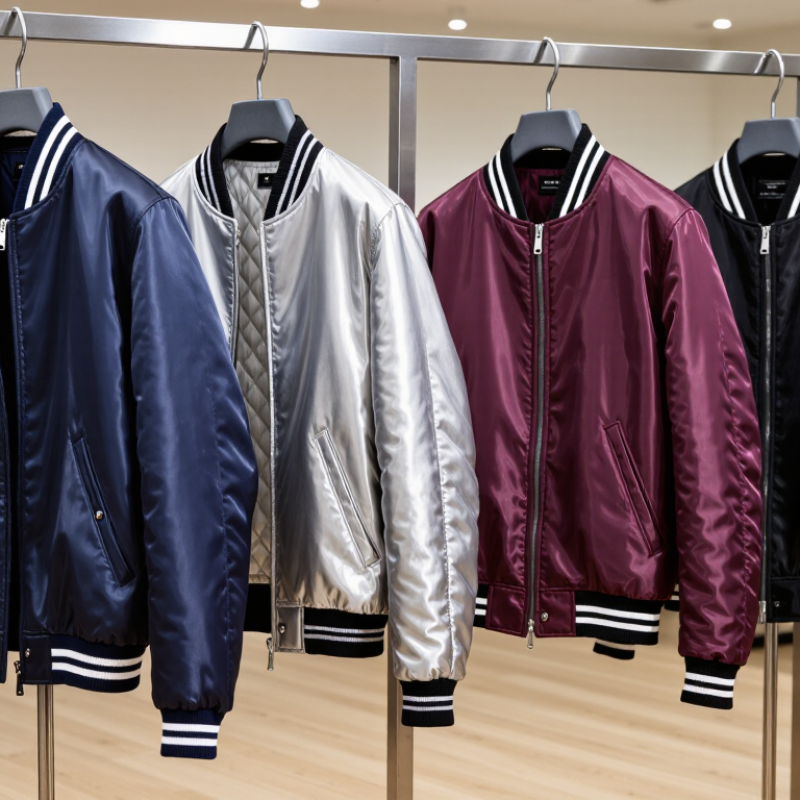
Satin bomber jackets are defined by their surface and construction, not by one specific fiber. Satin is a weaving method that creates a smooth, reflective face and a duller reverse side. Polyester, nylon, viscose, and blended yarns can all produce satin fabrics. A typical bomber jacket includes a front zip, ribbed cuffs, a ribbed waistband, and a short, relaxed silhouette.

The global market is shaped by material cost, comfort, and visual appeal. Textile Exchange’s Materials Market Report 2024 recorded 124 million tonnes of global fiber production in 2023. Polyester represented about 57% of that volume, making it a practical choice for affordable satin outerwear. The same report noted that recycled polyester formed roughly 14% of total polyester output. This figure matters to global buyers, but recycled content alone does not prove durability or responsible production.

Manufacturers should provide fabric weight, fiber composition, colorfastness results, and shrinkage data before sampling. A glossy jacket may look premium under showroom lighting. It can appear cheap under daylight if the fabric is thin or poorly finished. That detail is often missed. The International Trade Centre’s trade data also shows how apparel sourcing crosses multiple production markets, increasing the need for consistent specifications and shipment records. Buyers comparing manufacturers should inspect seam density, zipper performance, rib recovery, and size grading. Certifications can support credibility, but they require verification. A certificate is not the whole story. Seasonal demand, freight costs, and changing import requirements can also affect final pricing.

Top Satin Bomber Jacket Manufacturers for Global Buyers? - Defining Satin Bomber Jackets and Their Global Market
Manufacturing Region Global Buyer Position Typical Initial MOQ Typical Bulk Lead Time Common Satin Materials Key Production Strengths Common Compliance Options Frequent Export Markets Buyer Suitability
China Large and highly diversified apparel-sourcing base with broad fabric and trim availability. 100–500 pieces per color or style, depending on factory scale and customization. 45–75 days after approval of samples, materials, and purchase order. Polyester satin, recycled polyester satin, acetate satin, and rayon blends. Complex embroidery, reversible construction, custom labels, detailed ribbing, and wide packaging options. OEKO-TEX® Standard 100, GRS, BSCI, Sedex-related audits, and buyer-specific testing where available. North America, Europe, Australia, Japan, South Korea, and the Middle East. Excellent for product variety and complex customization
Vietnam Important export-oriented apparel hub with strong capabilities for structured outerwear. 300–1,000 pieces per style is common for established production programs. 50–80 days, with additional time possible for imported fabrics and trims. Polyester satin, recycled polyester satin, nylon satin, and blended woven fabrics. Consistent sewing quality, outerwear assembly, factory compliance programs, and production for large retail supply chains. BSCI, WRAP, Higg-related assessments, OEKO-TEX® testing, and customer-specific social audits. United States, European Union, Japan, South Korea, Canada, and Australia. Strong for stable quality and export compliance
Bangladesh Major garment-exporting country with competitive pricing for medium-to-large production runs. 500–1,500 pieces per style is typical, although smaller programs may be accepted by specialized factories. 60–90 days after fabric confirmation and production approval. Polyester satin, recycled polyester, nylon, and cotton-blend satin-like woven fabrics. Cost-efficient cut-and-sew production, scalable capacity, bulk manufacturing, and established export logistics. WRAP, BSCI, SEDEX-related audits, ISO management systems, and buyer-required laboratory testing. European Union, United Kingdom, North America, and Australia. Best suited to price-sensitive bulk orders
India Versatile apparel and textile sourcing market with strong textile development and embellishment capabilities. 100–500 pieces per style for specialized suppliers; larger factories may require higher quantities. 45–75 days, depending on fabric development, embroidery, and wash requirements. Polyester satin, viscose satin, acetate satin, silk blends, and recycled-content options. Custom dyeing, embroidery, printing, hand-finishing, fashion development, and flexible small-to-medium runs. GOTS or GRS where applicable, OEKO-TEX® testing, SA8000, BSCI, and customer-specific audits. North America, Europe, the United Kingdom, the Middle East, and Australia. Strong for fashion-led and embellished designs
Turkey Nearshore apparel supplier for European buyers requiring shorter transit and responsive development. 100–500 pieces per style, depending on fabric availability and supplier capacity. 30–60 days for many standard programs, subject to material availability. Polyester satin, viscose satin, recycled polyester satin, and cotton-blend woven fabrics. Fast sampling, fashion-oriented development, quality finishing, and proximity to European distribution centers. OEKO-TEX® testing, GOTS or GRS where applicable, BSCI, ISO systems, and retailer-specific audits. European Union, United Kingdom, Switzerland, North Africa, and the Middle East. Ideal for shorter European lead times
Pakistan Established textile and apparel producer with competitive costs and integrated fabric access. 300–1,000 pieces per style, with variation by factory and order complexity. 55–85 days after design and material approval. Polyester satin, nylon satin, cotton blends, and other synthetic woven fabrics. Competitive sewing costs, textile integration, embroidery, printing, and private-label production. BSCI, WRAP, Sedex-related audits, ISO systems, and buyer-requested chemical and product testing. European Union, United Kingdom, North America, and the Middle East. Suitable for cost-focused customized programs
Indonesia Export-capable apparel base with experience in fashion outerwear and branded private-label programs. 300–1,000 pieces per style is common for export-oriented factories. 50–85 days, depending on production capacity and imported components. Polyester satin, recycled polyester satin, nylon satin, and blended woven fabrics. Outerwear construction, embroidery, screen printing, garment washing, and detailed finishing. WRAP, BSCI, OEKO-TEX® testing, ISO systems, and customer-specific social compliance programs. North America, Europe, Australia, Japan, and South Korea. Good for fashion outerwear and decorative details

Buyer reference: A satin bomber jacket is typically a rib-trimmed, zip-front jacket made from a smooth woven satin fabric. MOQ, lead time, certifications, and material availability vary by supplier, order size, season, and customization level. The figures above are practical industry ranges rather than guarantees for any individual manufacturer.

Key Criteria for Evaluating Satin Bomber Jacket Manufacturers

For global buyers, satin bomber jacket manufacturers should be judged by evidence, not glossy samples. In factory reviews, I check fabric composition, weight, weave, and surface recovery. A jacket may look rich under showroom lighting, yet flatten after two warehouse folds. Request pre-production samples in the intended satin blend. Measure GSM, colorfastness, pilling, seam slippage, and zipper performance. Independent laboratory reports are more reliable than verbal claims.

Capacity matters, but usable capacity matters more. Ask for monthly output, peak-season utilization, sample lead time, minimum order quantity, and defect records. A supplier promising 50,000 pieces may lack trained operators for ribbed cuffs or clean quilting. Confirm inline inspection, final inspection, needle control, and corrective-action records. Use ISO 2859-1 sampling methods where appropriate. I would also audit communication speed. Delayed answers often predict delayed approvals. This is not perfect; a small factory can outperform a large one on consistency.

Traceability deserves equal weight. Textile Exchange’s Materials Market Report 2024 estimates global fiber production reached 124 million tonnes in 2023. It may reach 160 million tonnes by 2030. Buyers should map satin fibers, dyes, trims, and packaging to documented suppliers. UNEP reports about 92 million tonnes of textile waste are generated annually. That figure makes sampling discipline and repairable construction commercially important. Request restricted-substance testing, recycled-content evidence, and wastewater records where relevant. Price still matters, but unexplained savings deserve questions. A signed code of conduct is not proof of performance.

Top Satin Bomber Jacket Manufacturers for Global Buyers

Key Criteria for Evaluating Satin Bomber Jacket Manufacturers

This buyer evaluation framework prioritizes product quality, compliance, production reliability, customization capability, and commercial flexibility. The percentage values represent recommended weighting for comparing manufacturers without relying on company or brand-specific data.

Leading Manufacturing Regions and Supplier Capabilities

Top Satin Bomber Jacket Manufacturers for Global Buyers?

China remains a major sourcing region for satin bomber jackets. Its factories often combine computerized cutting, embroidery, quilting, and flexible finishing lines. Many suppliers can develop custom shell fabrics, ribbed cuffs, lining colors, and private-label packaging. Buyers should request fabric weight, colorfastness results, and pre-production samples before approving bulk orders.

Turkey offers strong access to European markets and shorter regional shipping routes. Its manufacturers are often experienced with refined tailoring, small and medium production runs, and responsive sampling. Vietnam and Bangladesh can provide competitive labor costs and growing export capacity. Their capabilities vary widely, so factory visits or independent inspections remain valuable. A clean sewing floor matters.

South Asian suppliers may support larger volumes, but satin quality can differ between batches. Ask about fabric sourcing, needle marks, seam slippage, and zipper performance. These details affect returns more than attractive product photos. A reliable supplier should explain minimum order quantities, lead times, inspection procedures, and carton measurements clearly. Payment terms also deserve careful review.

No region is perfect. Cheap production may involve slower communication or weaker development support. Higher unit prices may include better testing and tighter quality control.

Buyers can compare two or three sample rounds instead of trusting a single quotation. In practice, the best manufacturer is not always the lowest-cost option. It is the supplier that documents limitations and corrects defects before shipment.

How Global Buyers Can Compare Quality, Pricing, and Minimum Orders

Global buyers comparing satin bomber jacket manufacturers should inspect more than glossy product photos. In factory evaluations, I have learned that satin quality changes under direct light. Request fabric samples with measured GSM, fiber composition, and colorfastness results. Examine collar recovery, ribbed cuffs, lining attachment, and zipper movement. A clean seam should show even stitches without loose threads. Ask whether production samples match the approved reference sample. Small differences can become expensive after shipment.

Pricing needs a wider view. Compare the jacket cost, sample fees, packaging, inspection charges, and shipping terms. A lower quote may hide lighter fabric or weaker hardware. Request a detailed quotation with currency, payment stages, production time, and replacement policies. Minimum order quantities also deserve careful discussion. Some manufacturers accept a smaller trial order but charge more per piece. Others offer better pricing only after higher quantities. That is not always practical for a new collection.

Tips: Order samples from at least three factories. Wash or dry-clean them according to the care label, then check shrinkage and shine. Ask for production photos, measurement charts, and recent quality records. Verify whether the factory can repeat your color accurately. I once underestimated packaging space, which increased freight costs noticeably. That mistake still influences my comparison checklist. Also, avoid choosing on price alone; dependable communication can save more than a small discount.

Import, Compliance, and Customization Considerations for Buyers

Top Satin Bomber Jacket Manufacturers for Global Buyers?

Importing satin bomber jackets requires more than comparing factory prices. The 2024 Textile Exchange Materials Market Report estimated global fiber production at 124 million tonnes in 2023. Polyester remained the dominant fiber. Buyers should request fiber composition, recycled-content evidence, and fabric weight before approving samples. Satin can look identical under showroom lighting. It may perform very differently after washing.

Compliance must be checked before bulk production. Ask for restricted-substance test reports covering dyes, finishes, zippers, and printed labels. Requirements differ by destination, including chemical limits, fiber labeling, flammability rules, and children’s product controls. The EU’s REACH framework and U.S. textile labeling rules are common reference points, but they are not interchangeable. Confirm the correct tariff classification with a qualified customs professional. A supplier’s general certificate is not enough.

Customization also needs measurable specifications. State the satin weave, GSM, lining content, rib recovery, seam strength, color standard, and tolerance range. Request a pre-production sample and a wash-test sample. The 2023 World Bank Logistics Performance Index shows that customs efficiency and shipment reliability vary widely between trade routes. Build buffer time into delivery plans. I have seen buyers focus too heavily on embroidery options and overlook carton compression. That mistake can create permanent creases. No checklist is perfect. Independent inspection remains sensible before shipment, especially when the order includes multiple colors or complex trims.