
One-stop supplier of jackets

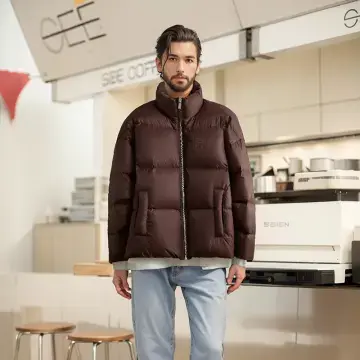
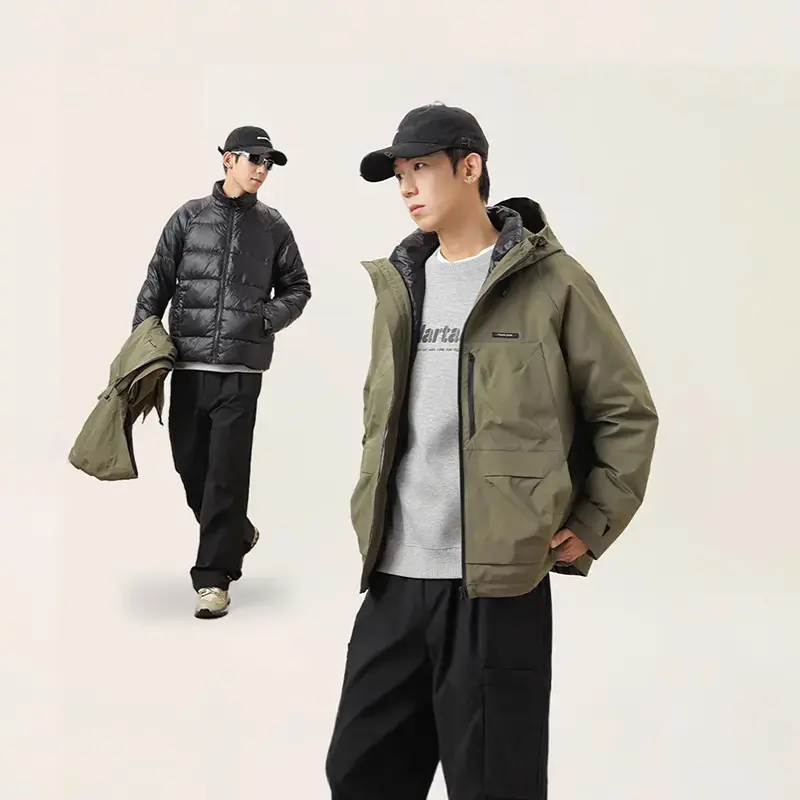

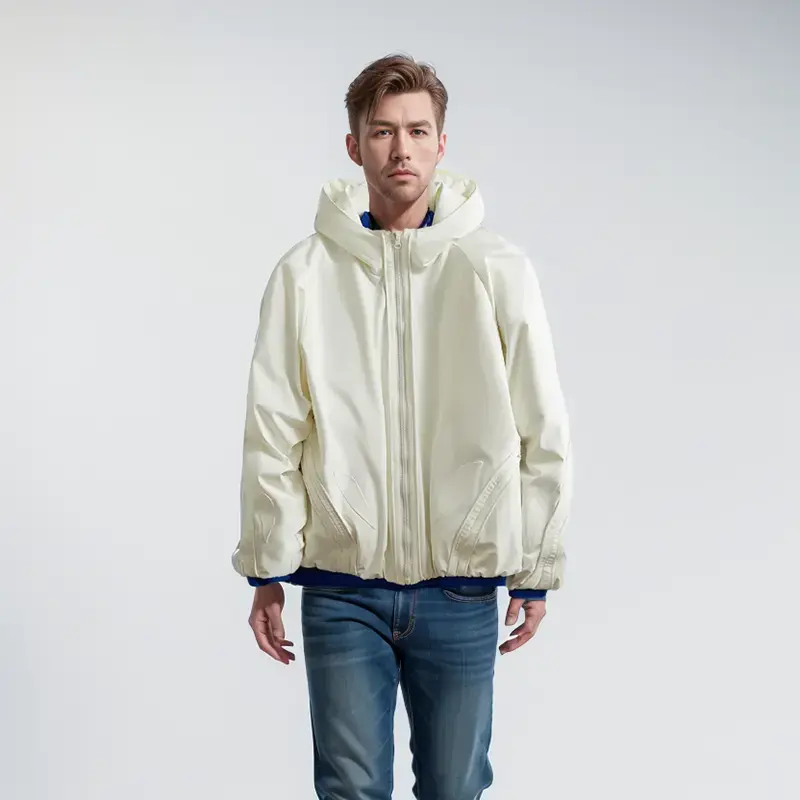
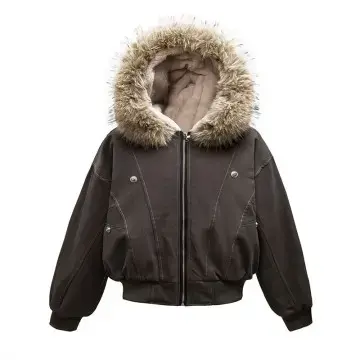
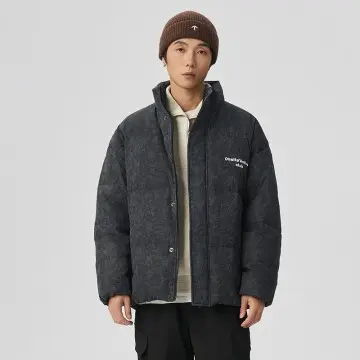
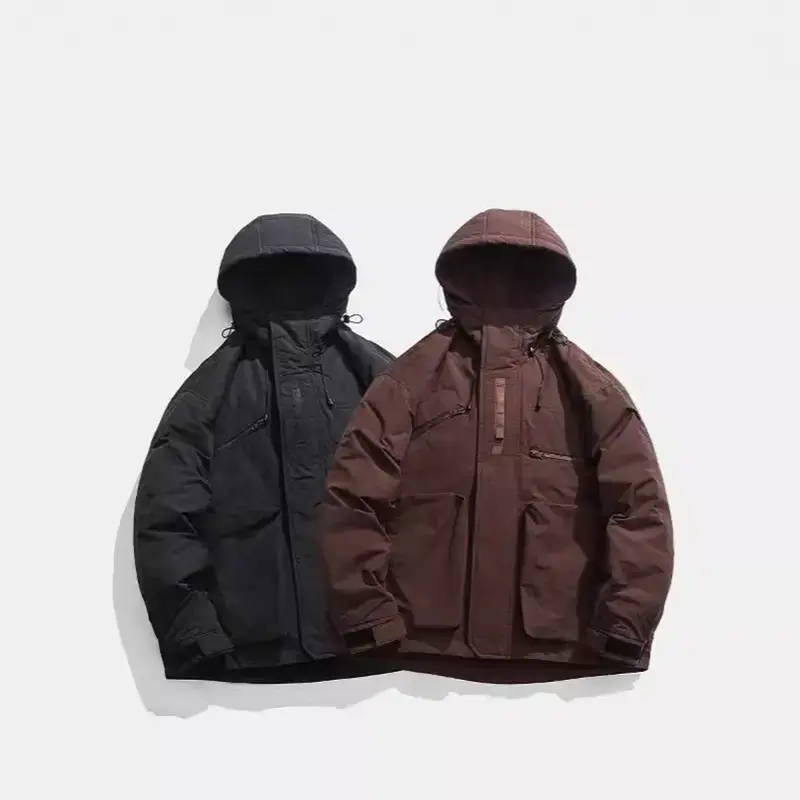

Anyone who sees down jackets will understand
Here is everything you want to know about down jackets.
If we talk about down, there is a lot of content. As consumers, we only need to grasp the most core knowledge points.
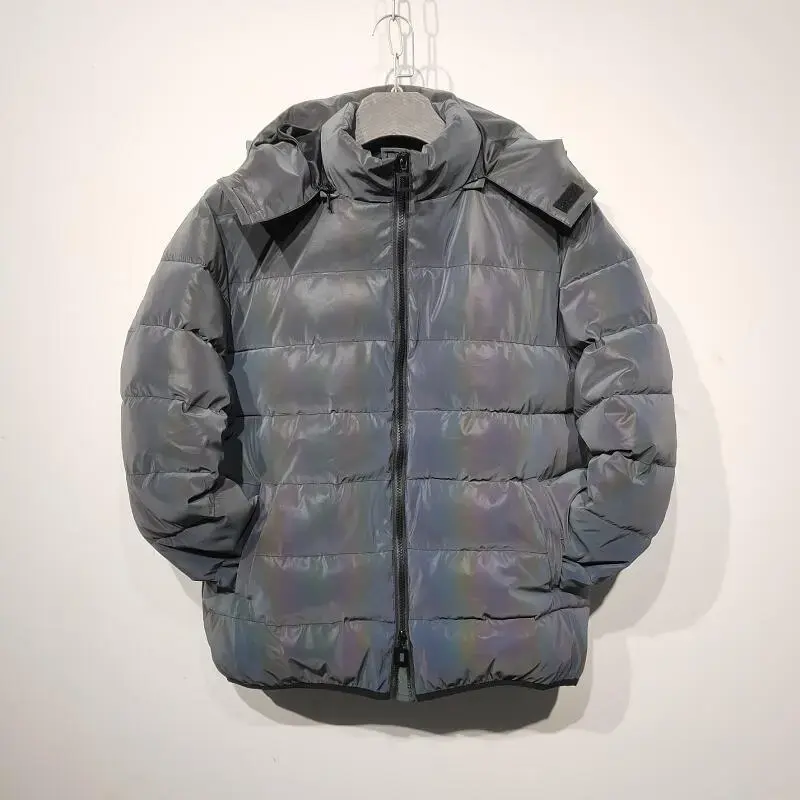
1. Why does down keep warm?
In simple terms, the structure of down can lock still air. The fluffier the down, the more air it locks. Air is a poor conductor of heat. As long as the air does not flow (no wind), it is difficult to conduct the heat of the human body. Some curious babies can't help but ask, why not fill the clothes with air directly? Don't say, there is really such inflatable clothing, and the inflation volume can be adjusted according to the changes in the outside temperature. But inflatable clothing has a fatal disadvantage, that is, it cannot leak. Imagine whether such clothes are completely airtight and inconvenient to move? Therefore, Down Jackets that are both light and warm can be said to be a milestone product in the history of clothing.
2. Why is it still cold when wearing A Down Jacket outside?
Assuming that The Down Jacket you wear matches the outside temperature, the problem lies in another key material of the down jacket-the fabric. There are three basic forms of heat transfer, namely heat conduction, heat convection and heat radiation. As mentioned in the first point, down locks still air and blocks heat conduction. But when the wind blows and causes air convection, which leads to heat convection, the thermal insulation effect of down will be greatly weakened. If you wear it a lot in outdoor scenes, such as going out frequently or cycling, especially when the local wind is strong, you should consider the windproof performance of the fabric. The windproof design of the hem, collar, hat, cuffs, etc. of the down jacket is also related to this point. In addition, down is afraid of moisture, and down that is stained with water loses its warmth-keeping performance. The outdoor weather is changeable, so there are down jackets with windproof and waterproof fabrics, or down jackets that are worn as linings with assault jackets.
3. Since down is afraid of moisture, why do ducks swim so happily in the water?
Ducks and geese have something called the preen gland. When combing their feathers, ducks and geese will use their mouths to press the tail feathers. The purpose is to squeeze out the oily secretions from the tail feathers, and then use these secretions to evenly rub the feathers, so that the feathers can be waterproof. The down raw materials must be cleaned and degreased during processing (a certain residual fat rate will be retained), otherwise the cleanliness will not meet the standard and will produce fishy odors and other odors. There are also water-repellent down jackets on the market. The principle is to add waterproof polymers during the cleaning process of the down.
4. What are the three indicators of down?
Down content, fluffiness, and filling amount.
Down content: It was previously called down content. The new national standard implemented on April 1, 2022 has changed the term "down content" to "down content". What does this change mean? Down includes both feathers and down. Feather refers to feather pieces and feather filaments that fall off feathers, while down is mainly used for warmth preservation, so the higher the down content, the better. In the past, the so-called 90 down refers to a down content of about 90%. But the down here includes both down and broken down filaments. Compared with down filaments, down is like dandelions, one by one, and a large amount of static air can be retained inside. The "down content" in the old national standard includes both down and down. If a lot of broken down filaments are mixed in the filled down, the warmth retention performance will be greatly reduced, and down filaments are easier to penetrate into down than down. Therefore, in order to standardize, the new national standard requires that only the down content be marked, and the down content cannot be less than 50%, otherwise it cannot be called a down jacket. In short, the higher the down content, the better the quality, the less down filaments and other impurities, the better the fluffiness, and the less likely it is to penetrate down.
Fluffiness: An important indicator for measuring the warmth of down, it refers to the volume occupied by one ounce (30 grams) of down under certain conditions (unit: cubic inches). For example, if one ounce of down occupies 700 cubic inches, the fluffiness of the down is 700. The fluffier the down, the larger the volume it occupies, and the more air it can lock. High fluffiness makes down jackets lighter, and fluffiness has a great impact on the warmth performance of thin down jackets (because the amount of filling is not much). The thicker the down jacket, the more limited the gain brought by the increase in fluffiness. In other words, if you want a thin down jacket that is both light and warm, try to choose a high fluffiness one.
Filling volume: This is easy to understand, it refers to the total weight of down filled in a single down jacket. Different styles, lengths, thicknesses, and filling volumes vary. The filling amount of thin and light down jackets is generally less than 100 grams, which is suitable for the early winter season; the filling amount of medium-thick down jackets is generally around 180 grams, which is usually suitable for the warmer areas in southern my country; the northern region generally requires thick down jackets with a filling amount of more than 200 grams, and professional outdoor fields even have down jackets with a filling amount of up to 500 to 600 grams to cope with extreme weather.
5. Is the more filling amount the better?
In the actual production of down jackets, there is a reasonable value for the filling amount, which is related to many factors such as the style of the down jacket, the fabrics used, the craftsmanship, and the fluffiness of the down. The most important one is related to the volume of down that can be loaded in the whole garment. The filling amount of thin and thick, short and long down jackets is definitely different, and the filling amount of down with different fluffiness is also different. In a certain volume of down warehouse, there is an upper limit to the filling amount. Filling too much will not only not increase the warmth performance, but will squeeze the down flowers against each other, squeeze out the air, and reduce the warmth performance. Of course, the experienced factory will know how much down a piece of clothing should be filled with. As consumers, we only need to choose products of different styles and different filling amounts according to our needs.
6. Is goose down better than duck down?
Generally speaking, the quality of goose down is better than duck down. The down clusters of goose down are larger and have less odor than duck down. This can also be seen from the prices of the two. For the same specifications, the price of goose down raw materials is about twice that of duck down.
Data source: China Down Industry Association
The above is the usual situation, but the gap between ducks is sometimes greater than the gap between ducks and geese. For example, there is a kind of duck called goose in Iceland. A quilt of Icelandic goose and duck down costs more than 100,000 yuan. There is also a duck-like duck-like poultry called Muscovy duck. Although its value is not as outrageous as its distant relatives in Iceland, it is also a noble duck. Muscovy ducks are larger in size, and the down they produce is of good quality, large down clusters, and high fluffiness. Compared with goose down of the same quality, it can be said that it is difficult to tell which is better, and it is certainly better than ordinary low-puff goose down. In fact, from an economic point of view, if the down content, fluffiness and filling volume are the same, there is little difference between duck down and goose down in terms of warmth retention performance, and choosing duck down may be more cost-effective.
VII. Is white duck (goose) down better than gray duck (goose) down?
There is actually no difference between white and gray down in terms of warmth retention performance, and the price of raw materials is almost the same. It's just that gray down is easy to be transparent when used on light-colored fabrics, and its appearance is not as good as white down. Therefore, the new national standard only distinguishes between duck down and goose down, and no longer distinguishes between gray down and white down.
VIII. How to maintain and maintain down jackets?
Try to reduce the number of washings. If the part is dirty, pour a little neutral laundry detergent and wipe it with a hot towel. If it is damp and moldy, wipe it with an alcohol cotton ball, then wash it by hand and use detergent to wipe off the stains; hand washing is preferred. If machine washing, it is best to dry it in time (except for fabrics that cannot be machine washed and dried) or ventilate and dry it to avoid exposure.
If it is convenient to carry for short trips, you can roll it up for storage, but it cannot be vacuum compressed for a long time, which will cause irreversible damage to the down.