
One-stop supplier of jackets
Classification and characteristics of denim jacket fabrics
Classification and characteristics of Denim Jacket fabrics
(I) Classification by thickness
The thickness of denim is one of the important factors to consider when choosing fabrics. According to the thickness, denim can be divided into various specifications, such as 4.5 ang, 6 ang, 8 ang, 10 ang, 11 ang, 12 ang, 13.5 ang and 14.5 ang. 4.5 ang denim is very thin and is usually used to make summer women's vests and sleeveless shirts; while 14.5 ang denim is very thick, enough to be used to make winter men's cotton-padded jackets. Most of our common jeans are made of 8 ang to 12 ang denim. For denim jackets, 8 ang to 12 ang fabrics are generally selected, which can ensure sufficient thickness and durability without being too heavy, suitable for wearing in spring and autumn.
(II) Classification by organizational structure
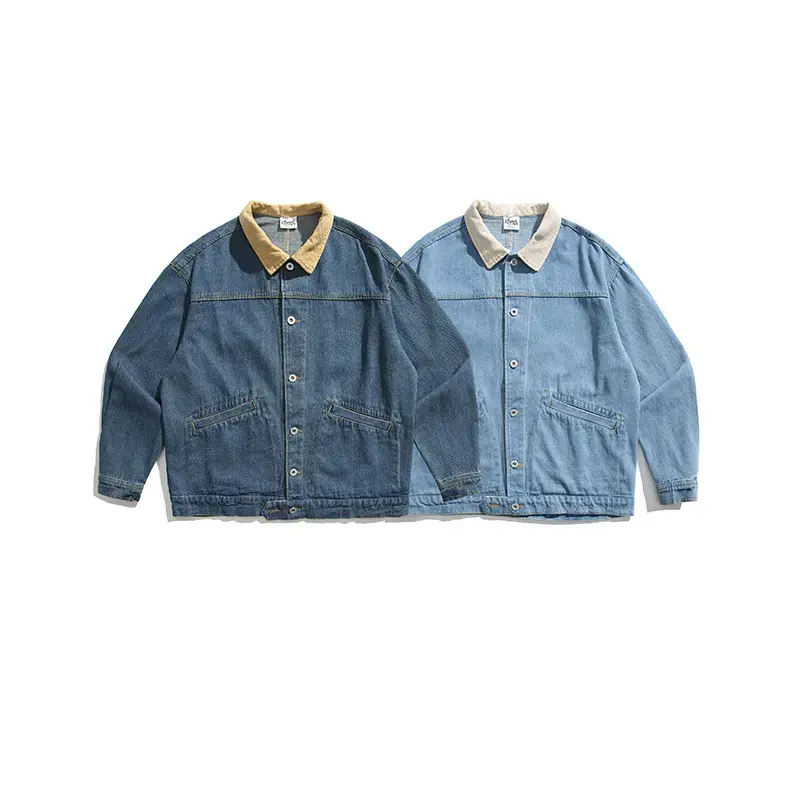
From the organizational structure point of view, there are many types of denim fabrics, the common ones are plain, twill, herringbone, interwoven, bamboo, dark and flocked denim. Among them, twill is the most commonly used weave structure of denim. Its characteristics are that the warp yarn is dark in color (usually indigo blue) and the weft yarn is light in color (usually light gray or white yarn). It is woven with a right twill weave of three up and one down. The cloth surface presents a clear twill texture, thick texture and good wear resistance. Plain denim is relatively rare. Its front and back textures are similar, it feels harder, has good breathability, but its elasticity and flexibility are relatively poor. It is mostly used to make some retro-style denim jackets.
(III) Classification by ingredients
In terms of ingredients, denim is mainly divided into two categories: pure cotton and blended. Pure cotton denim is the most classic type. Its advantages are skin-friendly and soft, good breathability, comfortable to wear, and strong moisture absorption. It can effectively absorb sweat and keep the skin dry. Blended denim is a small amount of chemical fiber, such as spandex and polyester, added to pure cotton. Among them, the addition of spandex can increase the elasticity and flexibility of the fabric, making the denim jacket more close-fitting and comfortable, suitable for making slim-fit styles; while polyester can improve the wear resistance and wrinkle resistance of the fabric, making the denim jacket more durable and easy to care for.
(IV) Classification by process
1. Ring-spun denim
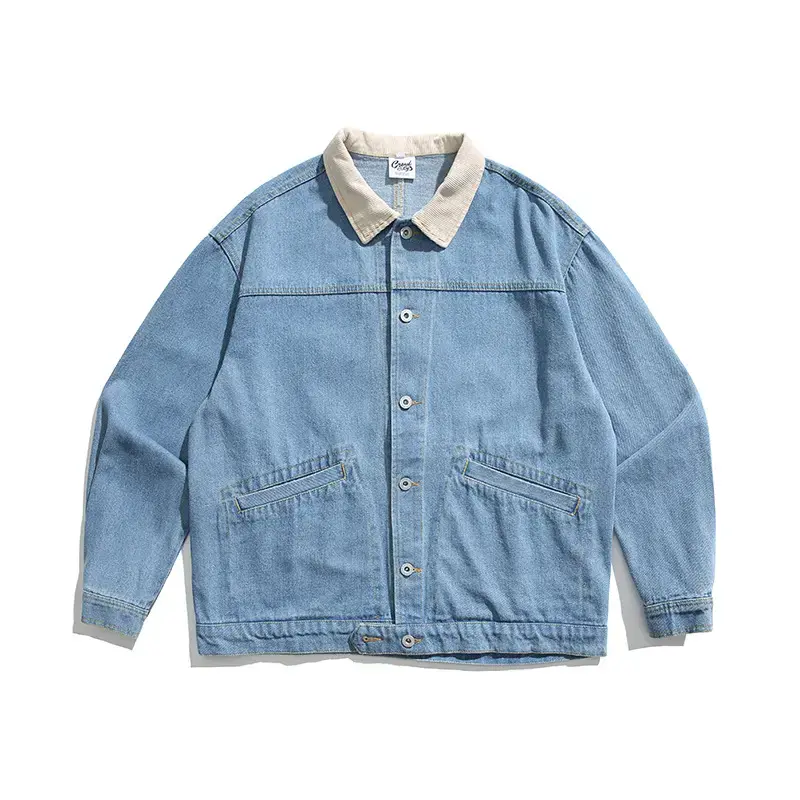
Ring-spun denim adopts the ring spinning process, which is characterized by good hand feel, good drape, high tear strength, and after grinding and washing, the surface will present a hazy bamboo style, which is in line with the current fashion trend of pursuing individuality and natural style. In the production process of ring-spun denim, different texture effects can be achieved by adjusting the thickness and density of the yarn to meet the diverse market needs.
2. Bamboo denim
Bamboo denim forms a unique striped texture by adding bamboo yarn in the warp or weft direction. Factors such as the thickness, length and spacing of the bamboo yarn determine the clarity and density of the bamboo texture. Bamboo denim has a strong visual impact and decorativeness, which can add a unique sense of fashion and artistic atmosphere to the denim jacket.
3. Weft stretch denim
Weft stretch denim is made by adding spandex stretch yarn to the weft yarn, which makes the fabric elastic and more comfortable to wear. Its elasticity is generally between 20% and 40%, and the specific value depends on the fabric structure design. Weft stretch denim with good elasticity can not only better fit the human body curve, but also keep comfortable during exercise. It is especially suitable for making women's denim jackets and close-fitting styles.
4. Special color denim
Special color denim mainly adopts super indigo dyeing or extra deep indigo dyeing process to make the color of the fabric rich and bright, and it can still maintain good color fastness after washing. The dyeing depth of this fabric is particularly deep, and the amount of indigo dye dyed per unit weight of yarn is much more than that of conventional denim, so it presents a brighter and fuller blue. Denim jackets made of special color denim have a fashionable appearance and full personality, and are deeply loved by consumers who pursue unique styles.
5. Over-dyed denim
Over-dyed denim is made by dyeing other colors of dyes, such as sulfur black, sulfur grass green, sulfur blue, etc. on the basis of indigo dyeing, to increase the color level and visual effect of the fabric. This kind of fabric has rich color changes and unique color light, which can meet the needs of different consumers for personalized colors and is an ideal choice for fashionable denim jackets.
6. Colored (multi-color) denim
Colored denim is also called multi-color denim, including bromine indigo (commonly known as emerald blue in the market) denim, sulfur black denim, and coffee, emerald green, gray, khaki, and sulfur blue denim with sulfur dyes. There are also a small amount of bright red, pink, and princess denim dyed with Nafto dyes or reactive dyes. This type of denim is rich in color, breaking the single blue tone of traditional denim, and providing more creative space for the design of denim jackets.