
One-stop supplier of jackets
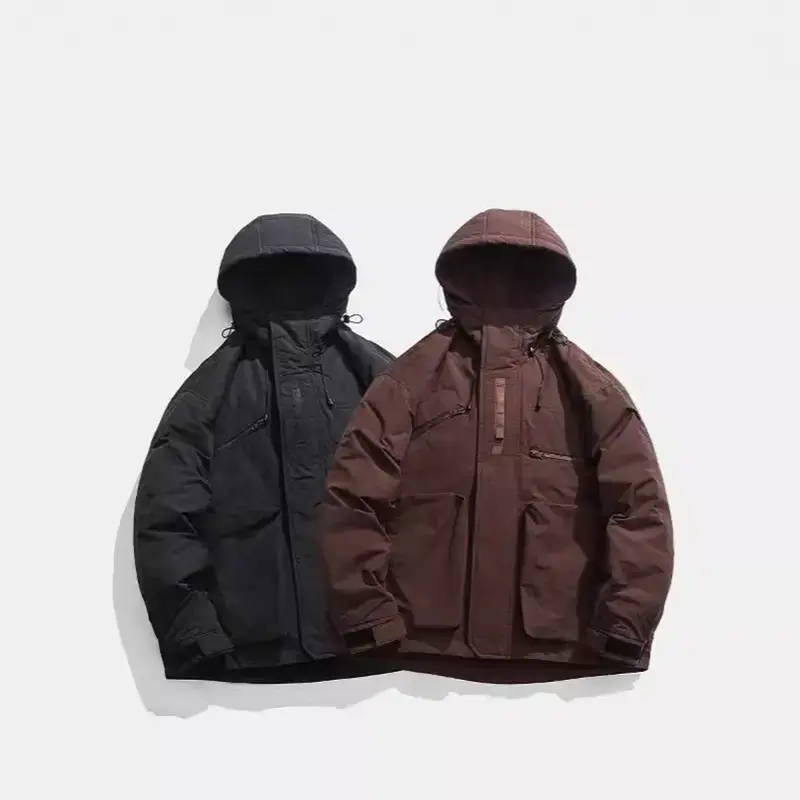
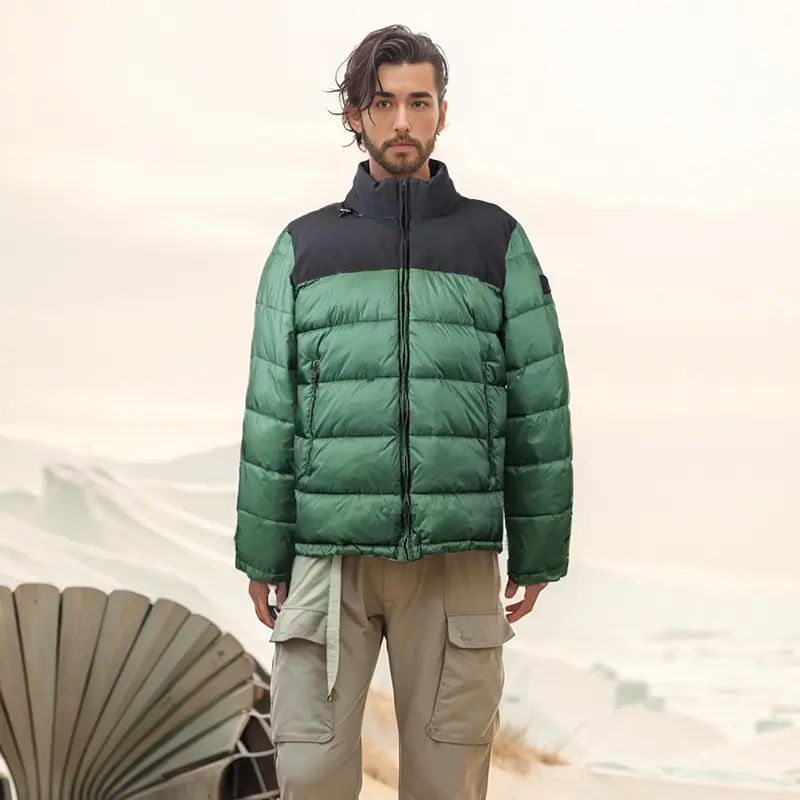
Get the down jacket "down" dry goods, you can do a good job in design
Down jackets are a new field for fashion designers if they have never been exposed to them. There are too many professional knowledge and skills, such as filling materials, down content, fluffiness... Today, let's talk about the "down" knowledge of down jackets in detail.
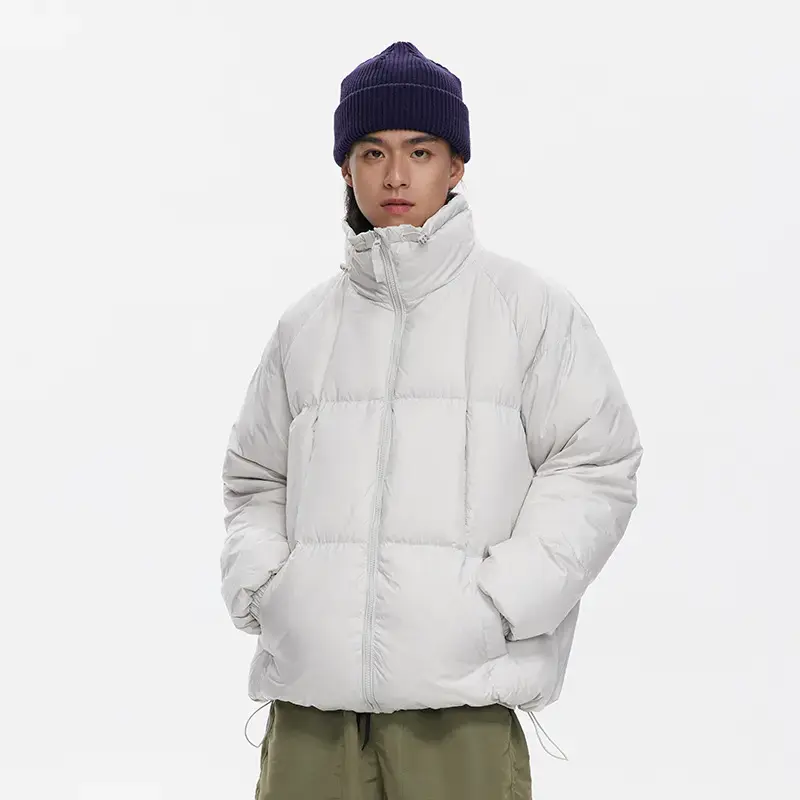
Common indicators of down jackets
For fashion designers, the commonly used indicators in down Jacket Design, such as filling materials, down content, filling amount, fluffiness, etc., should not be asked by other departments without knowing anything.
Filling
The biggest difference between down jackets and other ready-made clothes is that there are more fillings. The filling refers to the down, which refers to the keratin fiber that is closest to the body surface, has the best warmth retention, and is the softest.
The order of price from high to low is: white goose down>grey goose down>white duck down>grey duck down.
From the above order, we can pay attention to two points:
First: color difference
Grey goose down/grey duck down will be transparent when encountering light-colored fabrics. This is what we designers need to pay attention to. Sometimes, for the sake of cost, when using grey down, we should pay attention to whether there are light-colored styles in the same color.
Second: The difference between goose down and duck down
Goose down is better than duck down mainly because of the following points:
Bigger down: Goose down has long down fibers, large down buds, and higher fluffiness, and the higher the fluffiness, the better the quality of down jackets.
Full down: Generally, the growth period of geese to maturity is at least 100 days, while that of ducks is 40 days, so the down buds of geese are fuller than those of ducks.
Excellent fluffiness: Smaller rhombuses are evenly distributed on the barbs of goose down, while the rhombuses on duck down are larger and concentrated at the ends of the small barbs, so goose down can produce a larger distance space, better fluffiness, and stronger warmth retention.
Better rebound: Goose feathers have better curvature, are finer and softer than duck feathers, have better elasticity, and stronger rebound.
No odor: Geese are herbivores, while ducks are omnivores, so the odor of goose down will be much smaller, and there is basically no odor if it is well processed.
Use time: goose down can be used longer than duck down. The use time of goose down can reach more than 15 years, while the use time of duck down is only about 10 years.
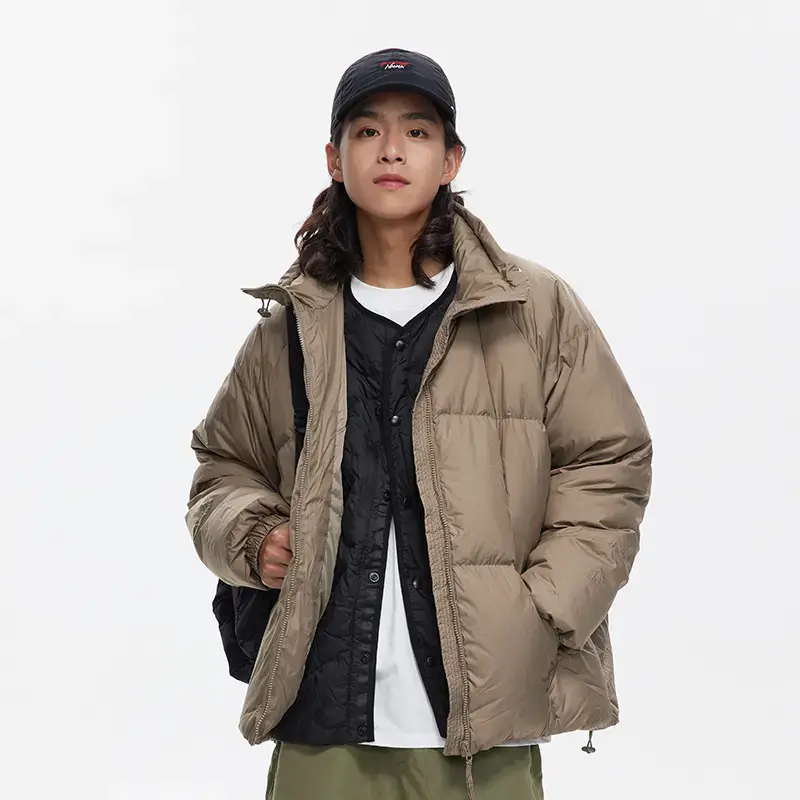
Down content
In addition to the difference between different types of down, there is another thing to note, the down content. Down content: Down content is the proportion of down in down, generally expressed as a percentage.
If the down content of A Down Jacket is 90%, it means that the down accounts for 90% of the filling, and the remaining 10% is feathers.
Generally speaking, if the down content is less than 50%, it cannot be called a "down jacket". Under the same conditions, the higher the down content, the better the warmth retention, and of course the higher the price.
Filling amount
Filling amount: Filling amount is not an indicator of down quality, it refers to the weight of all down filled in a down jacket.
The filling amount of a general outdoor down jacket is about 250-450 grams depending on the target design.
It is the key factor that determines the quality and warmth retention of a down jacket under the same conditions (type, fluffiness, filling amount, etc.). The higher the filling amount, the better the warmth retention of the down jacket. However, designers need to pay attention to the fact that the more filling, the more bloated it is, which will also reduce the comfort of wearing.
Semi, when designing down jackets, I am often asked by pattern makers, how much down do you want to fill in this down jacket?
According to the specific style, it can be roughly summarized as follows:
Thin style: 100g~150g
Neutral style: 150g~180g
Thick style: 180g~200g
Thickening: 200g~300g
Extreme use: more than 300g
Basically, 200g in the north has a better warmth retention effect.
The above filling amount is only for reference and cannot be generalized. The specific filling amount depends on the length, thickness of the surface cloth, density of the quilting lines, etc.
For example, it is popular to use ready-made fabrics (unconventional down materials) to make down jackets, which are relatively thick, so the filling amount can be appropriately reduced;
The density of the quilting lines is also related. For the same filling amount, the denser the quilting lines, the less fluffy the appearance effect.
Semi, does it mean that the heavier the weight, the more valuable it is?
Laymen look at the weight of down jackets, while experts actually look at the weight of the area filled with down, regardless of the length.
Fill power
Fill power: Fill power is an important indicator for measuring the warmth of down, which refers to the value of the volume cubic inches occupied by one ounce (30 grams) of down under certain conditions.
If the space occupied by one ounce of down is 600 cubic inches, the fill power of the down is called 600FP.
The higher the fluffiness of the down, it means that the down with the same filling amount can fix a larger volume of air layer to keep warm and insulate, so the warmth of the down is better.
Fluffiness is not a hard indicator in China, and the relative error of measurement is also large. It is generally divided into 550, 600, 700, 800 and 900FP.
Generally, down jackets with a fluffiness of 600 or 700 are enough, and down jackets with a fluffiness of 800 or 900 can be worn in extremely cold areas.
It refers to adding cubic down that has been modulated at the top into an empty container, stirring it thoroughly, and then dropping it under the gravity of the container pressure plate for one minute. The fluffiness of the volume occupied by the down directly affects the warmth retention of down jackets and products.
Semi, how should this fluffiness be used?
In fact, every company has a commonly used fluffiness standard, which designers rarely pay attention to.
1. Mild cold level (between -5° and 0°): 600+ fill power
2. Conventional level (between -20° and -5°): 600-700 fill power (most common)
3. Extreme cold level (between -30° and -15°): 650-750 fill power, more than the conventional level above.
4. Extreme level (between -50° and -20°): 800 or more fill power.
Choosing lining cloth
Ordinary coats and jackets use lining cloth, and the "lining cloth" of down jackets is lining cloth. Why add lining cloth? The chance of shedding will be greatly reduced. The better the quality, the better the anti-down effect.
Characteristics of lining cloth: thin and soft.
Commonly used is polyester taffeta, which can achieve anti-down after anti-down coating. Now the brand commonly uses 200t-350T polyester taffeta, and the high quality is also more than 400T.
semi, I see some down jacket fabric merchants directly write that no lining is needed?
Generally, high-density fabrics are treated with anti-down treatments such as calendering or coating.
Do you get it? Down jacket design is indeed a big subject, and it can become an independent system.