One-stop supplier of jackets
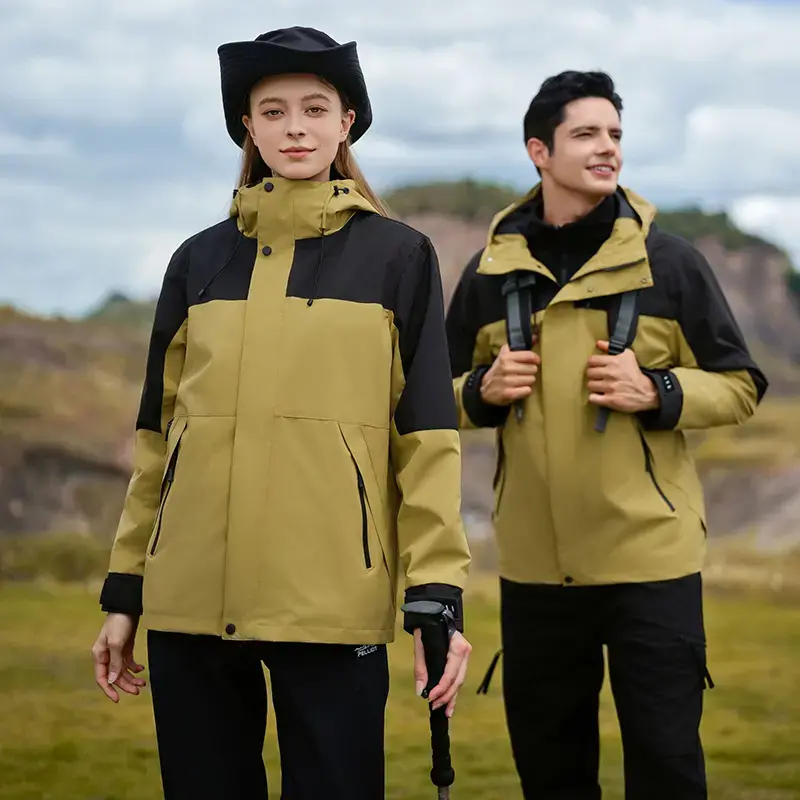

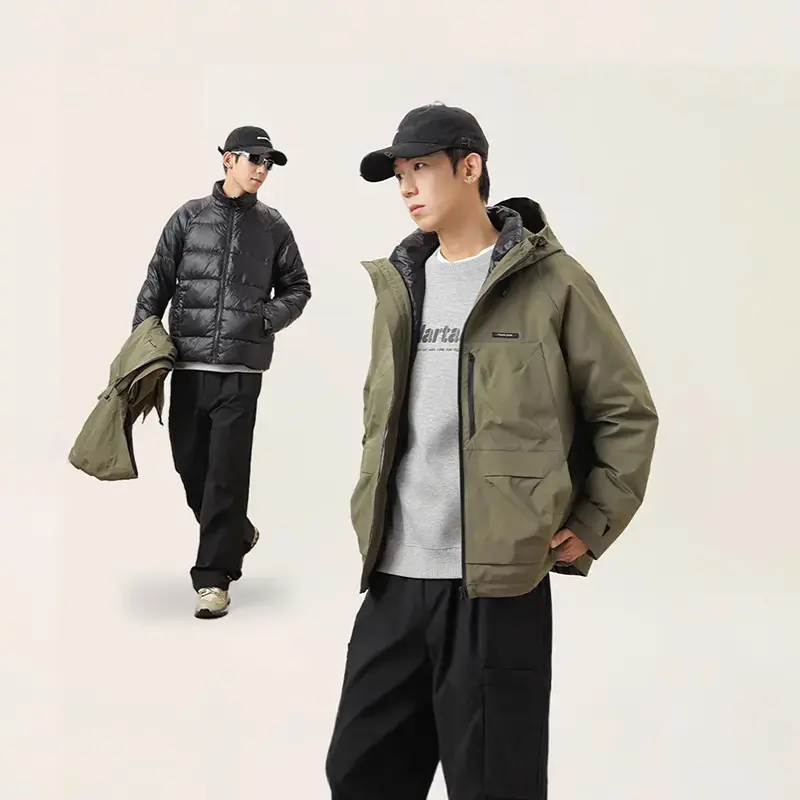

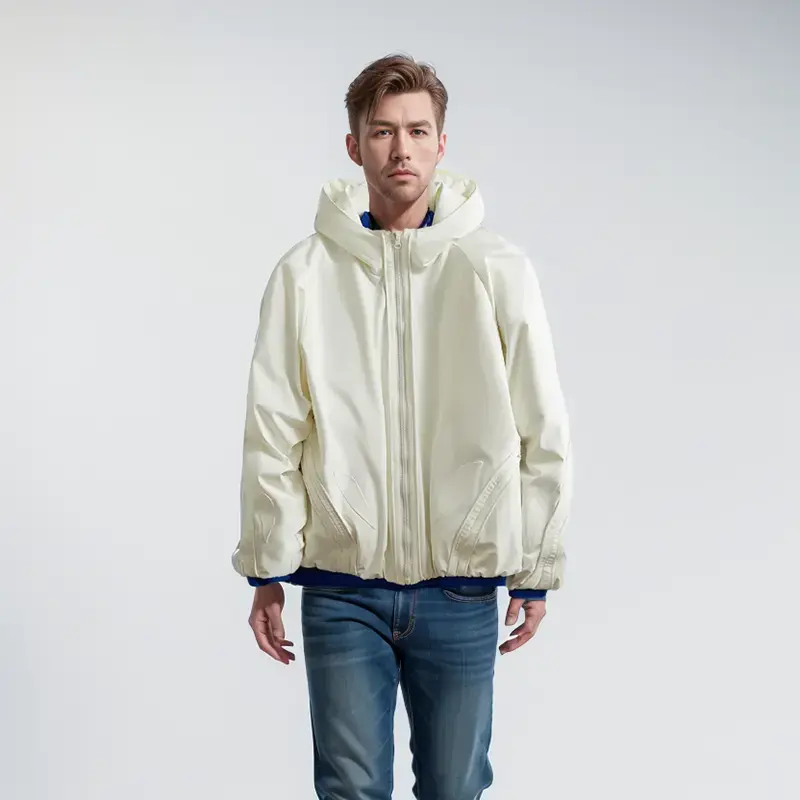
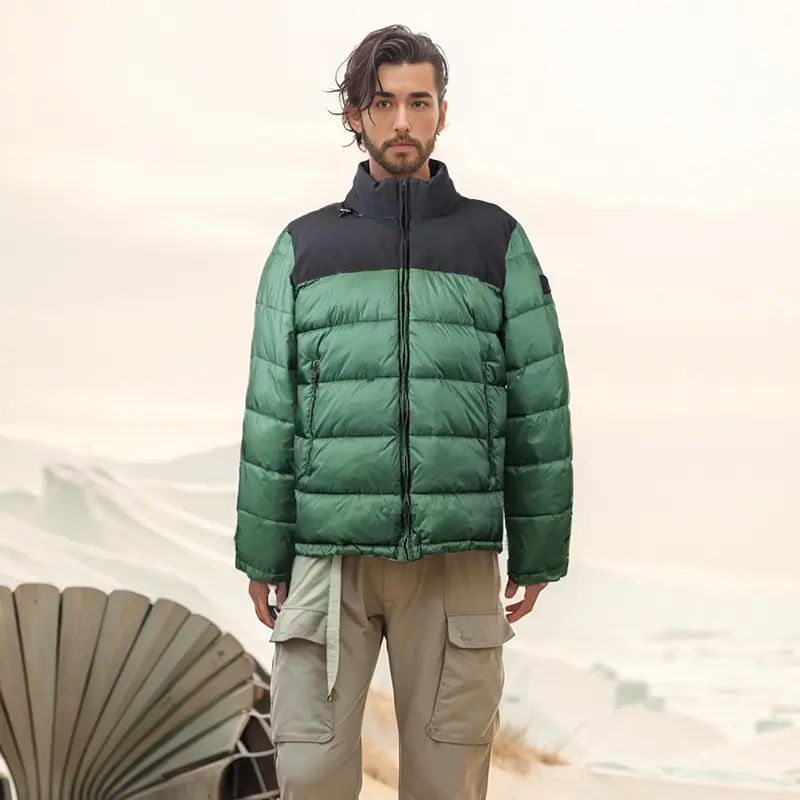
How cross-border sellers choose high-quality jacket suppliers
How Cross-Border Sellers Choose High-Quality Jacket Suppliers
I. Core Screening Dimensions: Establishing a Three-Dimensional Evaluation System
In cross-border trade, the supplier's "stability × quality × compliance" directly determines the success or failure of operations. Data shows that 62% of cross-border sellers have experienced stockouts, customer complaints, or compliance penalties due to supplier issues, while leading sellers, through systematic evaluation, can control the defect rate below 0.5%.
1. Quality Control: Full-Chain Verification from Raw Materials to Finished Products
Raw Material Traceability Standards: Suppliers are required to provide fabric testing reports, with a focus on verifying formaldehyde content, pH value, and decomposable carcinogenic aromatic amine dyes (must comply with GB 18401 Class B standards). High-end functional jackets also require additional testing for extractable heavy metals, phthalates, and other harmful substances.
Process Detail Verification: Key processes must have automated testing equipment; stitch density ≥12 stitches/3cm; zipper reciprocating test ≥500 times without failure; size change rate ≤±2% after 3 washes (refer to the "High-End Functional Jackets" group standard). Quality Inspection Process Requirements: First-piece inspection report, process inspection records, and finished product inspection report are mandatory. Before peak season, it is recommended to commission SGS or BV for third-party full-item testing, costing approximately 2000-5000 RMB per test.
2. Production Capacity Stability: Solving Delivery Delay Problems
Production Capacity Verification: Theoretical production capacity is calculated based on equipment quantity, and cross-verification is performed using order logs from the past 3 months to avoid the trap of actual production capacity being only 50% of the claimed capacity.
Risk Resistance Assessment: Confirm whether suppliers rely on a single raw material supplier (a percentage >60% indicates high risk), and whether they have dual-source procurement plans and contingency plans for power outages and raw material fluctuations.
Delivery Management Mechanism: On-time delivery rate ≥95%, order response time ≤48 hours, and a peak season priority supply agreement (it is recommended to reserve more than 20% of capacity).
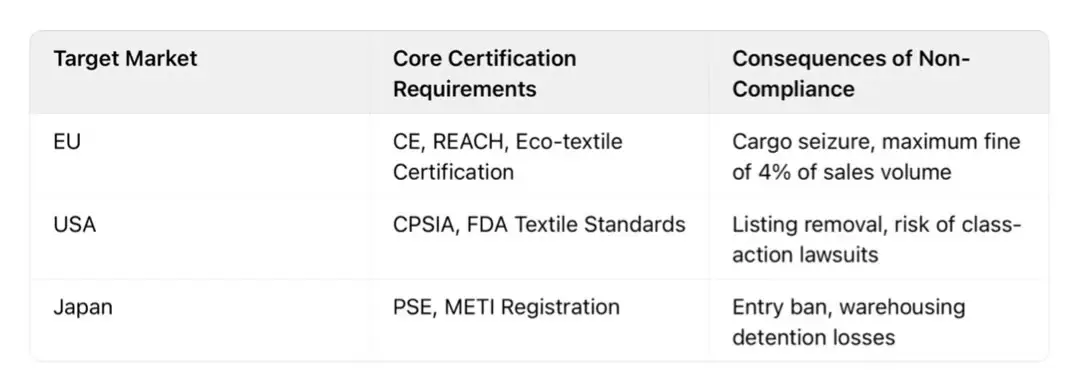
3. Compliance Adaptation: Aligning with Target Market Access Standards
The compliance requirements of different markets directly impact customs clearance, necessitating prior verification of supplier qualifications.
Additional Note: Functional jackets must meet specific standards. For example, electrically Heated Jackets must meet safety requirements of a maximum temperature ≤45℃ and a minimum average temperature ≥35℃. Bluetooth functionality must pass connection stability testing.
4. Partnership Adaptation: Matching Cross-Border Business Scenarios
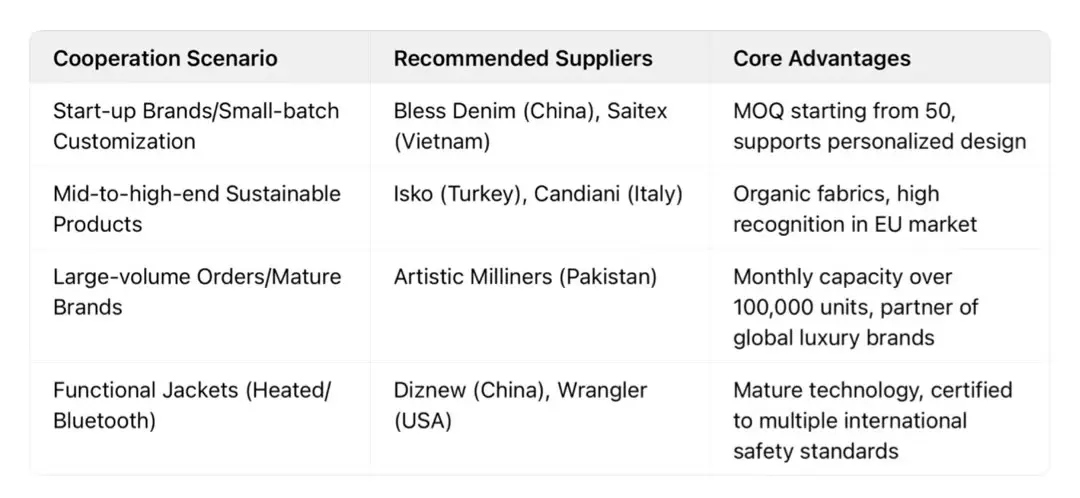
MOQ Flexible Selection: Startups can prioritize suppliers with an MOQ of 50-100 pieces (e.g., Bless Denim from China, Saitex from Vietnam). Established brands should partner with factories with a production capacity ≥100,000 pieces/month (e.g., Artistic Milliners from Pakistan).
Customization Capabilities: Verify OEM/ODM service support, such as embroidery, laser washing, and integration of functional components (inflatable pillows, Bluetooth modules). Sample production time should be ≤7 days. Sustainability Certification: For the European and American markets, suppliers with GOTS organic certification and those using ozone/enzyme washing processes are preferred. Turkish brand Isko and Italian brand Candiani have advantages in the field of environmentally friendly fabrics.
II. Practical Screening Steps: A Five-Step Approach from Initial Selection to Final Decision
1. Supplier Channel Screening
High-Quality Channels: International apparel exhibitions such as Magic Show, Alibaba Global Sources certified supplier database, and industry association recommendation lists (e.g., members of the Turkish Textile Association).
Initial Screening: Eliminate suppliers without international certification, those with a significant mismatch between MOQ and order volume, and those with a response time exceeding 72 hours.
2. Sample Verification
Required Tests: Fabric abrasion resistance (Martindale test ≥10,000 cycles), wash fastness (≥3 levels), zipper smoothness, and functional component testing (e.g., temperature uniformity of heated jackets).
Comparative Testing: Obtain samples from at least 3 suppliers simultaneously, conduct blind tests, and retain 2 suppliers for the next round.
3. Qualification Document Review
Core Documents: Business license, ISO 9001 quality system certification, target market-specific certification (such as EU REACH), and third-party testing reports within the last 6 months.
Intellectual Property Verification: Check trademark/patent status through USPTO and EUIPO to avoid infringement risks.
4. On-site/Remote Factory Inspection
Key Verification Points:
Production Equipment: Does the facility have automated cutting machines, intelligent sewing machines, and other key equipment?
Quality Inspection Process: Is a three-tiered quality inspection system (initial inspection, patrol inspection, and final inspection) in place?
Inventory Management: Raw material inventory ≥ 30 days of production needs to avoid material shortage risks.
Alternative Solution: If an on-site inspection is not possible, request the supplier to provide a panoramic video of the factory and live-streamed sampling of the production process.
5. Negotiation of Cooperation Terms
Core Terms:
Quality Guarantee Deposit: 5%-10% of the payment is reserved as after-sales guarantee;
Delivery Default: 1% of the order amount will be compensated daily for delays exceeding 7 days;
Return and Exchange Policy: Bulk returns and exchanges are supported when the defect rate exceeds 1%.
III. Avoidance Guide: Three Common Misconceptions
Focusing only on price while ignoring hidden costs: Low-priced suppliers may have the risk of cutting corners. The case of a 3C seller being fined $500,000 for 20,000 items due to supplier violations should serve as a warning.
Ignoring small-batch trial orders: Initial cooperation should include a trial order of 300-500 pieces to verify the supplier's quality control consistency and delivery stability.
Reliance on a single supplier: Maintain at least two backup suppliers for each product category, regularly test samples, and avoid stockouts due to factory closures or insufficient production capacity.
IV. Reference for Global High-Quality Suppliers (Category by Scenario)