
One-stop supplier of jackets



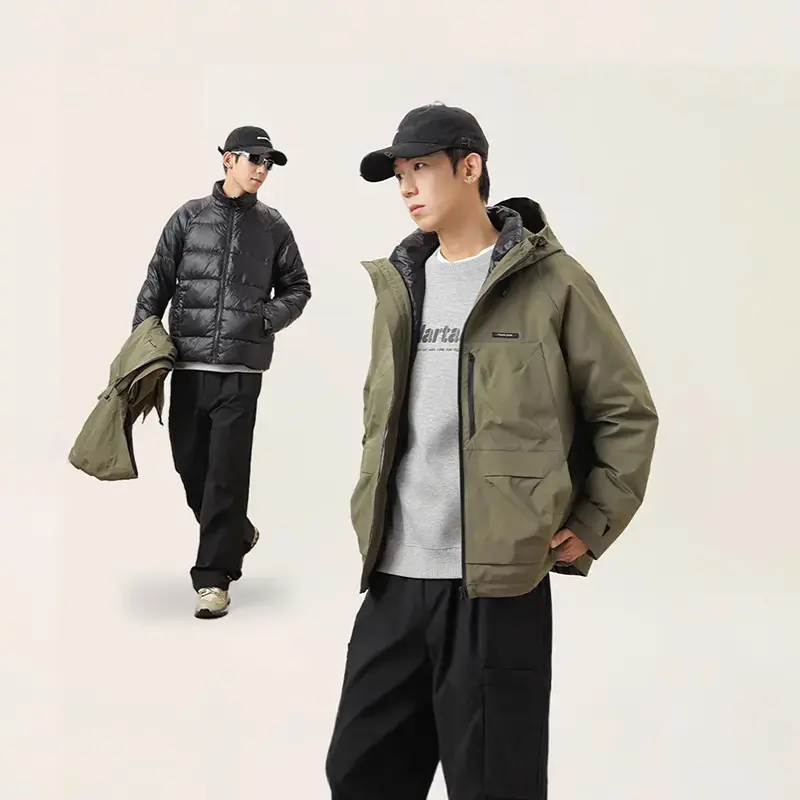






How to restore the fluffiness of a duvet after compression
How to restore the fluffiness of a duvet after compression - Professional Guide
In the down industry, whether it is A Down Jacket or a duvet, fluffiness is one of the key factors to measure its quality and thermal insulation performance. For international wholesale buyers, it is crucial to understand how to restore the fluffiness of a duvet, as this is directly related to the quality of the product and customer satisfaction. This article will delve into various methods and techniques for restoring the fluffiness of a duvet after compression.

1. Why does the fluffiness of a duvet decrease after compression
The main filling of a duvet is down, which is composed of feathers and down. The thermal insulation performance of down mainly depends on its fluffy structure, which can trap a large amount of still air, thereby playing a role in insulation and warmth. However, when a duvet is compressed for a long time, the down fibers will be squeezed and deformed, and the air between the down flowers will be discharged, resulting in a decrease in the elasticity of the down and a decrease in fluffiness. In addition, a humid and airtight environment will also accelerate the agglomeration of down and the loss of fluffiness.
2. Common methods to restore the fluffiness of down quilts
Airing method
Principle: The heat of the sun and the circulation of air can help the down to stretch again and restore its fluffy structure. At the same time, airing can also remove moisture and odor in the down quilt.
Operation steps: Choose a sunny day but avoid strong direct sunlight, and lay the down quilt flat in a well-ventilated place, such as a balcony, an outdoor clothesline, etc. Pat the quilt cover gently from top to bottom and from left to right every once in a while, which can help redistribute the down and speed up the process of restoring fluffiness. It is generally recommended to air it for 2-4 hours, and the specific time depends on the weather and the actual situation of the down quilt.
Beating method
Principle: Through the action of external force, the clumped down fibers are loosened and their fluffiness is restored.
Operation steps: Lay the duvet flat on the ground or on a hard table, and gently pat it from top to bottom, from left to right, and from inside to outside with your palm. The force should be moderate to avoid damaging the fabric of the duvet too hard. You can also use a soft brush or hanger to gently tap it, which will have a better effect. During the patting process, pay attention to the fluffiness of the duvet until the duvet is restored to the ideal fluffiness.
Shaking method
Principle: By shaking the duvet, the down can flow freely and redistribute inside the quilt, thereby restoring its fluffiness.
Operation steps: Hang the duvet, gently hold the corner or edge of the quilt with your hand, and shake it vigorously several times. You can start from one end and gradually move to the other end to ensure that the entire duvet is fully shaken. During the shaking process, you can also combine the patting method, and the effect will be more significant.
Washing method
Principle: A duvet that has been used for a long time may accumulate dirt and grease, which will affect the fluffiness of the down. These impurities can be removed by washing, making the down fibers cleaner and softer, thereby restoring their fluffiness.
Operation steps: Put the duvet in the washing machine, select the gentle washing mode, and use a detergent designed for down products or a neutral detergent. Avoid using chemicals such as bleach or strong acids and alkalis to avoid damaging the down fibers. During the washing process, you can soak the duvet for a while to allow the detergent to fully penetrate the down. After washing, do not dehydrate directly, but let the duvet dry naturally in the washing machine, then lay it flat in a ventilated place to dry, and gently pat the quilt to make the down fluffy again.
3. Professional equipment helps restore the fluffiness of duvets
Dryer
Principle: The dryer circulates hot air to stretch and fluff the fibers of the duvet during the drying process. But be careful not to use too high a temperature to avoid damaging the down fibers.
Key points: Before putting the duvet into the dryer, it is best to remove as much moisture as possible from its surface, which can be done by wringing it out or absorbing it with a dry towel. Then put the duvet into the dryer and select the low-temperature drying mode, generally controlling the temperature between 40-60℃. During the drying process, you can add a few tennis balls or desiccant bags into the dryer, which can play a role in colliding and loosening the down during the rolling process. The drying time is generally 30 minutes to 1 hour, depending on the size of the duvet and the power of the dryer. After drying, take out the duvet in time and pat it gently to restore its fluffiness.
Steam reduction equipment
Principle: Steam reduction is one of the internationally recognized best methods for restoring down. The down is fully wetted by high-temperature steam, so that the down fibers are stretched again under the action of moisture and heat, and then the down is blown dry and shaped with a hair dryer to restore its fluffiness.
Key points: Put the duvet into the pre-treatment box of the steam reduction equipment, and blow steam into it with a steam generator to make the down moist and even. After leaving it for a while, use a hair dryer to dry the down. During the drying process, pay attention to the control of wind force and wind direction to ensure that the down is fluffy and uniform. The steam reduction method is effective in restoring the fluffiness of the down, which can restore the fluffiness of the down to a fluffiness value close to the original state, and can effectively improve the cleanliness and hygiene of the down.

4. Daily maintenance to prevent the fluffiness of the duvet from decreasing
Correct storage: When storing the duvet, avoid folding or compressing it too tightly. It is best to hang or lay it flat. If folding is required, it can be placed in a breathable storage bag after folding and placed in a ventilated and dry place. At the same time, avoid placing heavy objects on the duvet to avoid long-term compression.
Regular patting: During daily use, regularly patting the duvet gently can help redistribute the down and maintain its fluffiness. It is generally recommended to pat 1-2 times a week for 5-10 minutes each time.
Avoid moisture: Keeping the duvet dry is an important measure to maintain its fluffiness. In humid weather, minimize the use of down quilts and avoid exposing them to humid environments. If the down quilt is damp, it should be dried or dried in time.
5. The impact of down quality on fluffiness recovery
High-quality down has higher fluffiness and elasticity, and is easier to recover even after being compressed. Generally speaking, the fluffiness of goose down is usually higher than that of duck down because the fibers of goose down are softer and slender. In addition, the maturity and cleanliness of the down will also have a certain impact on its fluffiness. Therefore, when purchasing down quilts, choosing high-quality down fillings can improve their service life and warmth performance, and is also conducive to the recovery of fluffiness.
6. Case analysis: Fluffiness recovery practice of down quilts by an international wholesale buyer
After receiving a batch of down quilt orders, an international wholesale buyer found that some of the down quilts were compressed during transportation and the fluffiness decreased. In order to meet customer needs, they adopted the following recovery measures:
First, they unfolded the down quilts naturally in a well-ventilated indoor environment and let them rebound naturally for 2-3 hours.
Then, the duvets were placed in the sun to dry for 3 hours and gently patted every half an hour.
For duvets with poor fluffiness recovery, they used steam reduction method to treat them. Through professional steam reduction equipment, the fluffiness of the duvets was restored to more than 90% of the original state.
After this series of recovery measures, the wholesale buyer successfully solved the problem of decreased fluffiness of the duvets. The customer was satisfied with the product quality and established a long-term cooperative relationship.
7. Conclusion
The fluffiness of the duvet is one of its core values. For international wholesale buyers, it is very important to master the method of restoring the fluffiness of the duvet after compression. Whether it is daily maintenance skills or the use of professional equipment and methods when encountering severe flattening, it can effectively extend the service life of the duvet and enhance the market competitiveness of the product. I hope that through the introduction of this article, it can help the majority of down industry practitioners to better deal with the fluffiness problem of duvets and provide customers with better products and services.