
One-stop supplier of jackets










In-depth analysis of the degree of damage to down fibers by steam reduction method
In-depth analysis of the degree of damage to down fibers by steam reduction method
Down, as a natural thermal insulation material, is widely used in clothing, bedding and other fields because of its lightness and good thermal insulation performance. In the processing and testing of down products, steam reduction method is a common treatment method, and its degree of damage to down fibers has always been the focus of industry attention. This article will deeply explore the impact of steam reduction method on the degree of damage to down fibers, in order to provide valuable reference for relevant practitioners.
1. Basic characteristics of down fiber
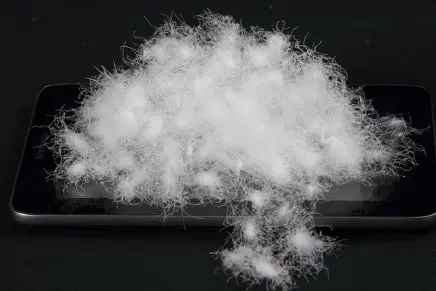
Down fiber is a natural protein fiber, mainly composed of keratin. Its fiber surface has a unique microstructure, showing dendritic branches, which makes the down fiber have good fluffiness and warmth. In addition, down fiber also has a certain elasticity and flexibility, which can resist external mechanical forces to a certain extent.
In the natural state, the chemical properties of down fiber are relatively stable, but under specific environmental conditions, such as high temperature, strong acid, strong alkali, etc., its chemical structure may change, thereby affecting the physical properties of the fiber.
2. Principle and application of steam reduction method
Steam reduction method is a method of treating down using high-temperature steam. Its basic principle is to remove impurities, grease and other substances on the surface of down fibers through the high temperature of steam, and at the same time, to expand the fibers to a certain extent to improve the fluffiness and warmth of the down.
In practical applications, steam reduction method is usually used in the cleaning and post-processing of down products. For example, in the production process of down jackets, down treated with steam reduction can be better filled between fabrics to improve the warmth of clothing. In addition, this method is also used in the testing process of down to evaluate the quality and performance of down.
3. Damage mechanism of down fiber by steam reduction method
(I) Physical damage
Changes in fiber surface morphology
During the steam reduction process, the action of high-temperature steam may cause changes in the microstructure of the surface of down fibers. Specifically, the branching structure on the fiber surface may be broken or deformed to a certain extent, making the fiber surface relatively smooth. Although this change in surface morphology improves the fluffiness of down to a certain extent, it may also reduce the friction between fibers and affect the warmth of down.
Changes in fiber diameter and length
High-temperature steam treatment may also cause changes in the diameter and length of down fibers. Under the action of steam, the fibers may shrink or swell slightly. If not handled properly, it may cause fiber breakage, thereby reducing the overall quality of the down. Studies have shown that after steam reduction treatment, the average diameter of down fibers may decrease, while the length may increase.
Changes in fluffiness
Fluffiness is one of the important indicators for measuring down quality. The steam reduction method can significantly improve the fluffiness of down by puffing the down fibers. However, this puffing effect is limited, and excessive steam treatment may cause excessive expansion of the fibers, which in turn affects their elasticity and flexibility, and reduces the fluffiness. Therefore, in actual operation, it is necessary to strictly control parameters such as steam temperature, pressure and treatment time to achieve the best fluffiness improvement effect.
(II) Chemical damage
Oxidation of cystine disulfide bonds
Cysteine in down fibers contains disulfide bonds, which play a key role in maintaining the chemical structure and physical properties of the fiber. During the steam reduction process, high temperature and active substances in the steam may cause oxidation of cystine disulfide bonds, thereby changing the chemical structure of the fiber. This chemical change may reduce the strength and elasticity of down fibers, making them more susceptible to mechanical damage.
Changes in protein structure
The action of high-temperature steam may also cause changes in the conformation of protein molecules in down fibers. The secondary structure and tertiary structure of protein molecules may partially unfold or refold under high temperature conditions to form a new structural state. This structural change may affect the physical properties of down fibers, such as hygroscopicity and breathability, and thus affect their application effect in products.
Changes in surface chemical composition
During the steam reduction treatment, the chemical composition of the surface of down fibers may change to a certain extent. For example, some surfactants, additives, etc. may react with chemical groups on the surface of the fiber under the action of high-temperature steam to form new compounds. These new compounds may change the chemical properties of the fiber surface, such as hydrophilicity and hydrophobicity, thereby affecting the processing and use performance of down.
4. Factors affecting the degree of damage to down fibers by steam reduction method
(I) Steam temperature
Steam temperature is one of the key factors affecting the degree of damage to down fibers by steam reduction method. Higher steam temperature can more effectively remove impurities and grease on the fiber surface and promote fiber expansion. However, too high a temperature may cause drastic changes in the chemical structure of the fiber, increasing the degree of damage to the fiber. Generally speaking, the appropriate steam temperature range is between 100℃ and 130℃. The selection of specific temperature needs to be comprehensively considered based on factors such as the type, quality and purpose of the down.
(II) Treatment time
The length of treatment time will also affect the degree of damage to down fibers by steam reduction method. A shorter treatment time may not fully achieve the effect of cleaning and expansion, while a longer treatment time may cause the fiber to be overheated, increasing the risk of chemical damage. In actual operation, the appropriate treatment time is usually determined based on the steam temperature and the specific conditions of the down, generally between 10 minutes and 30 minutes.
(III) Steam pressure
The magnitude of steam pressure also has an important influence on the degree of damage to down fibers. Higher steam pressure allows steam to penetrate deeper into the down fiber, improving the treatment effect. However, excessive pressure may cause mechanical damage to the fiber, resulting in fiber breakage or deformation. Therefore, in practical applications, the steam pressure needs to be reasonably adjusted according to the performance of the equipment and the characteristics of the down.
(IV) Types and quality of down
Down of different types and qualities have different tolerances to the steam reduction method. For example, compared with white duck down, the fiber structure of white goose down is more delicate, more sensitive to high-temperature steam, and more susceptible to damage. In addition, the initial quality of down will also affect its performance during steam treatment. Poor quality down, such as those containing more impurities and lower fiber strength, may be more susceptible to damage during steam reduction treatment.
5. Strategies to reduce damage to down fibers caused by steam reduction
(I) Optimizing treatment process parameters
By precisely controlling process parameters such as steam temperature, pressure and treatment time, it is possible to minimize damage to down fibers while ensuring treatment effects. For example, under the condition of meeting the requirements of cleaning and puffing, the steam temperature and pressure can be appropriately reduced, and the processing time can be shortened to reduce the risk of chemical and physical damage to the fiber.
(ii) Adopt pretreatment and post-treatment measures
Before steam reduction treatment, the down can be pretreated, such as using a mild detergent to remove surface impurities and reduce the direct impact of high-temperature steam on the fiber. After treatment, appropriate post-treatment methods can be adopted, such as natural drying or low-temperature drying, to avoid further damage to the down fiber by high-temperature drying. In addition, some protective agents, such as antioxidants, softeners, etc., can be added during the post-treatment process to improve the performance of the down.
(iii) Choose appropriate equipment and materials
Using advanced steam reduction equipment can more accurately control the parameters of steam and reduce the damage to the down fiber caused by equipment instability. At the same time, choosing appropriate materials to make the contact parts of the equipment, such as high-temperature resistant and corrosion-resistant materials, can avoid secondary pollution and damage to the down fiber by the equipment.
(iv) Strengthen quality inspection and monitoring
During the production and processing of down products, the inspection and monitoring of down quality should be strengthened. By regularly testing the fluffiness, whiteness, fiber strength and other indicators of down, the damage problems that may occur during the steam reduction process can be discovered in time, and corresponding measures can be taken to adjust and improve. In addition, a complete quality traceability system can be established to track and record each batch of down, so that the cause can be quickly located and solved when problems arise.
6. Application status and development trend of steam reduction method in the down products industry
(I) Application status
At present, the steam reduction method has been widely used in the down products industry. In the production process of Down Jackets, down quilts and other products, this method is used to improve the fluffiness and warmth of down, thereby improving the quality and competitiveness of the products. At the same time, in the cleaning and testing of down, the steam reduction method also plays an important role, providing strong support for ensuring the quality of down products.
(II) Development trend
With the continuous improvement of consumers' requirements for the quality of down products and the enhancement of environmental awareness, the application of steam reduction method in the down products industry will show the following development trends:
Green and environmental protection: In the future, the steam reduction method will pay more attention to environmental protection performance. Research and develop more environmentally friendly cleaning agents, additives, etc. to reduce environmental pollution. At the same time, optimize the treatment process, reduce energy consumption, and achieve sustainable development.
Intelligent automation: With the help of advanced sensor technology and automatic control systems, the steam reduction treatment process is intelligent and automated. By real-time monitoring of various indicators of down, the parameters of steam are automatically adjusted to improve the treatment effect and production efficiency.
Diversified applications: In addition to the traditional down product production field, the steam reduction method will also be expanded in the modification and functionalization of down fibers. For example, through steam reduction treatment, down fibers are given special properties such as antibacterial and waterproof to meet the needs of different consumers.
7. Conclusion
As a commonly used down treatment method, steam reduction has a significant effect on improving the fluffiness and warmth of down. However, this method also causes certain damage to down fibers, including physical damage and chemical damage. By optimizing treatment process parameters, adopting pretreatment and post-treatment measures, selecting appropriate equipment and materials, and strengthening quality inspection and monitoring, this damage can be alleviated to a certain extent to ensure the quality and performance of down products.
In the future, with the continuous advancement of technology and changes in market demand, the application of steam reduction in the down products industry will pay more attention to green environmental protection, intelligent and diversified development. This will help promote the sustainable development of the down products industry and provide consumers with better quality and more environmentally friendly products.