One-stop supplier of jackets

Technical measures for exporting down and its products
Technical measures and countermeasures for exporting down and its products
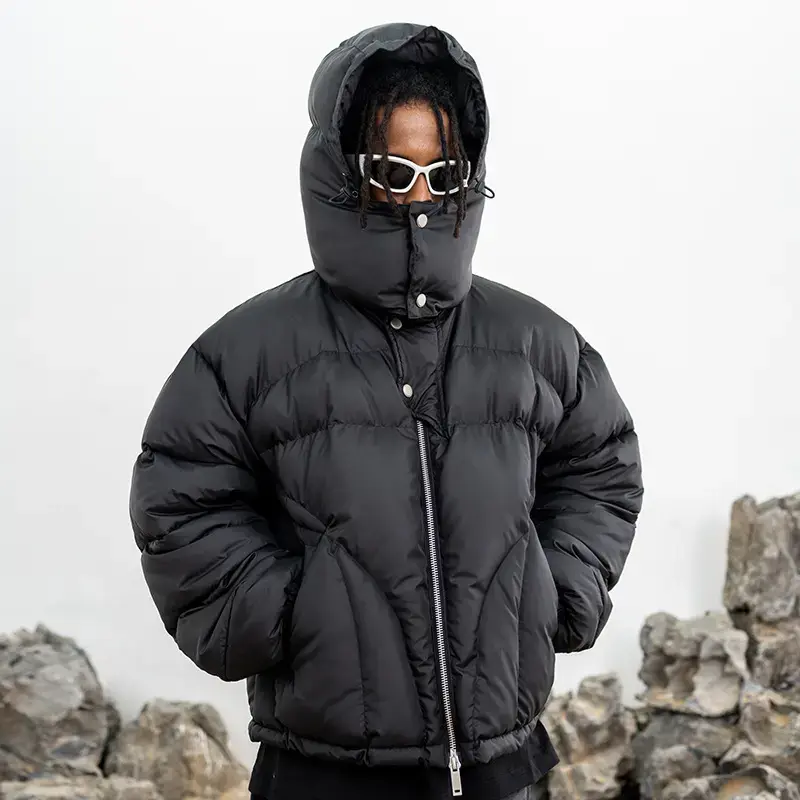
China is a major producer and exporter of down and down. Its export trade volume accounts for about 80% of the international market, and it plays a decisive role in the international down and down market. However, in recent years, foreign non-trade technical measures have emerged one after another, which has brought certain adverse effects to my country's export of down and down and its products. This Hangzhou-US Inspection (HQTS-QAI) reviewed the technical measures for the export of down and down in various countries from the aspects of safety and health, animal welfare standards, importing country access requirements, etc., and proposed countermeasures for the down and down and its products industry. Provide reference for improving international competitiveness!
Technical measures for down and down importing countries
my country's down and down products are mainly exported to the United States, the European Union, Southeast Asia and other countries and regions. Among them, the main exporting countries (regions) of down are the United States, Vietnam, Japan, Taiwan, Germany, Myanmar, etc. The main exporting countries of down products are the United States, Australia, the United Kingdom, New Zealand, Chile, Canada, etc.
The technical measures that export countries (regions) impose on down and down and its products mainly include the following aspects:
First, various countries (regions) have varying inspection method standards and quality (labeling) standard requirements, including safety and health requirements, such as microbial content, cleanliness, oxygen consumption index, etc. in down;
The second is animal welfare requirements. For example, the phenomenon of some companies plucking down from live geese has caused some animal protection consumers to boycott down products;
Third, the importing country has set access requirements. For example, down product processing companies exporting to some states in the United States need to obtain disinfection licenses and registration certificates, and down exports to the EU need to be registered in the EU traces system.
Measures required by major countries
With the deepening of trade liberalization, in order to protect their own markets, occupy the international market, and obtain maximum economic benefits, countries often formulate product standards that are conducive to their own trade. Many product standards have also appeared in the down and down products industry. These standards have strict requirements on safety and health indicators, such as cleanliness, oxygen consumption index, microbial indicators, etc., which must meet the requirements of the importing country.
01Safety and health requirements
cleanliness index
Cleanliness is a hygienic indicator that reflects the degree of washing of down, also known as transparency. Standards such as the United States, Australia, and the European Union all stipulate that the detection value of cleanliness indicators must be greater than 300 mm, while Japanese standards require greater than 500 mm. The higher the down cleanliness value, the cleaner the down is washed. The higher the requirements of the washing process, the greater the loss and the higher the cost
Oxygen consumption index indicator
The oxygen consumption index is a hygienic index that reflects the degree of drying of down and down, also known as oxygen consumption. The United States, Canada, Australia, etc. require that the oxygen consumption index be less than 10 mg/100 g. The European Union requires that the oxygen consumption index be less than 20 mg/100 g (microbial index testing is required when it is greater than 20 mg/100 g), but the Japanese standard requires that it be less than 4.8 mg/100 g. 100g. The lower the oxygen consumption index, the longer the washing and drying time, and the higher the cost.
microbial indicators
The European Union was the first to propose microbial indicators. As early as 1981, Italy issued a decree requiring microbial testing of fillers for down products. The European Union issued "Feather and Down - Hygiene and Cleanliness Requirements" in 2001, proposing microbial indicator requirements. The standard stipulates that when the oxygen consumption of down filling exceeds 20mg/100 g, four types of bacteria, including mesophilic aerobic bacteria, Streptococcus faecalis, Clostridium sulfite-reducing and Salmonella, need to be detected. Below 20 mg/100 g, no testing is required.
02Importing country access qualification requirements
EU access requirements
According to the requirements of Regulation No. 1069/2009 of the European Parliament and of the Council (EC), feathers and down entering the EU must come from factories approved or registered by the competent authorities of third countries, and manufacturers must register in the EU TRCES system. Starting from May 1, 2011, companies without registration are not allowed to export to the EU.
U.S. Disinfection License and Registration Requirements
To enter the U.S. market, foreign bed and down products (quilts, pillows, cushions, etc.) must have a Sterilization Permit issued by the state government where they are sold in the U.S. and be registered with the corresponding state government (Registration), and the above two The certificate number is printed on the product label.
03Animal welfare requirements
At present, many countries have formulated relatively complete animal welfare regulations. For example, the European Union officially implemented the new EU animal welfare regulations on January 1, 2013, paying more attention to food safety, animal health and animal welfare issues.
At present, most importers require enterprises to hold a "Letter of Commitment for the Use of Non-live Plucked Down" issued by the China Down Industry Association, while some importers require down and down production enterprises to hold a "Letter of Commitment for the Use of Non-Live Plucked Down" issued by an international third-party agency. Down Source Traceability Report”.
In addition, in 2014, the American Textile Exchange formulated responsible down standards. The North Face company has begun implementing the standard and announced that by 2017 it will use 100% down that meets the standard. The standard covers breeding, slaughtering and transportation, and pays attention to animal welfare and environmental protection. For example, forced feeding, moulting, and live plucking are not allowed, clean water and nutritious food must be fed, and residential density, living environment, swimming pools, Sports fields, daily health care, humane slaughter, humane transportation, etc.
preventive solution
01 Pay attention to the technical regulations of various countries
Many countries such as Europe and the United States have revised technical regulations and standards for down and down based on their own national conditions. If export companies fail to grasp the information of the importing country in time and produce according to the original standards, they will suffer trade losses.
02 Do a good job in product quality control
Enterprises must strengthen their awareness of main responsibility, constantly understand the dynamics of the international market, and learn and abide by the rules of the international trade market. It is necessary to implement the certification strategy of enterprises and products, improve the quality management level of enterprises, strengthen the control of the entire down production process, do a good job in product quality inspection, and ensure that product quality meets the requirements of the importing country.