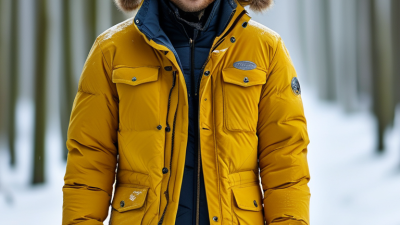
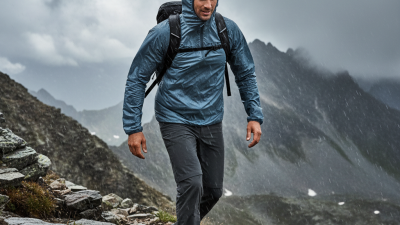
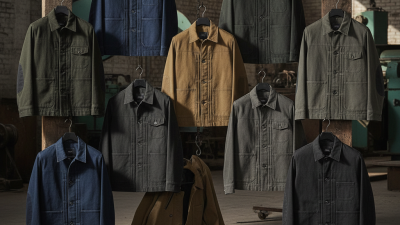
How to Choose a Goose Down Jacket in 2026?
Choosing a Goose Down Jacket in 2026 requires more than chasing the highest fill-power number. Modern jackets differ in insulation, shell fabric, construction, sourcing, and weather resistance. A 900-fill jacket may feel remarkably light, yet it may not provide enough warmth for wet, windy conditions.
Dr. Richard Golick, founder of IDFL and a recognized down-testing authority, has emphasized a practical principle: “Down quality must be measured, not guessed.” That idea remains important when comparing labels, marketing claims, and real performance. Check fill power, down-to-feather ratio, fill weight, and the reliability of the testing standard. The jacket should also fit closely without compressing the insulation around your shoulders, chest, or hips.
Small details matter. Examine the hood adjustment, cuff seal, zipper guard, and pocket placement. A tightly woven shell can reduce drafts and limit feather leakage. Hydrophobic down may resist moisture briefly, but it cannot replace careful drying and proper storage.
There is no perfect jacket.
A warm alpine model may feel excessive in a city. A lightweight travel jacket may disappoint during long, stationary use. Personal experience matters, but it can also mislead us. I once judged a jacket by softness alone and overlooked its low fill weight. This guide will compare practical features, explain technical terms, and identify compromises before you buy. The best Goose Down Jacket is not simply the most expensive option. It is the one that matches your climate, activity, fit, budget, and willingness to care for it.
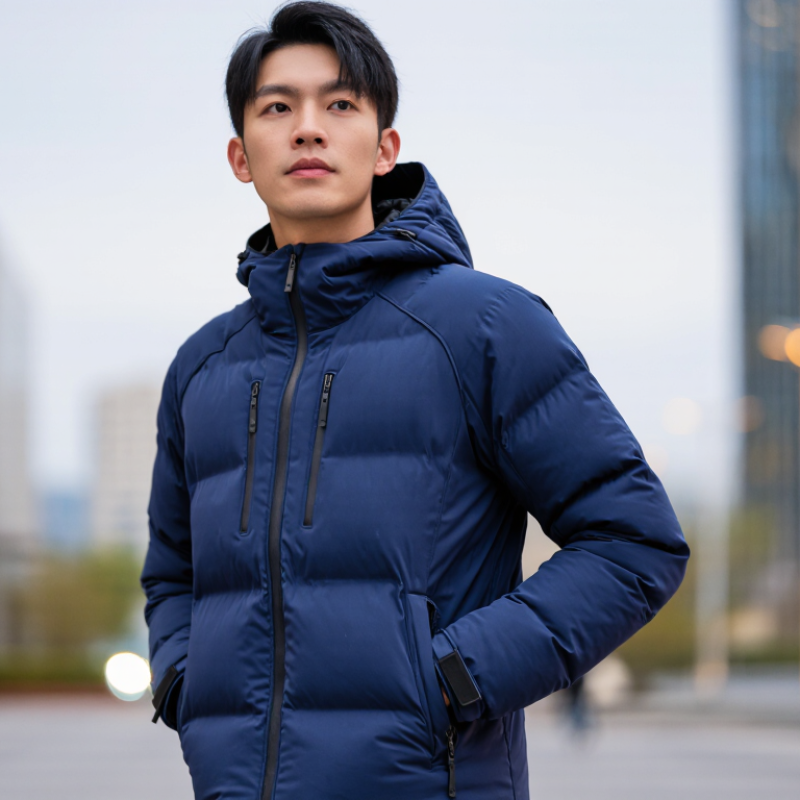
Understanding Goose Down Quality and Insulation Ratings
How to Choose a Goose Down Jacket in 2026?
Goose down quality starts with fill power, but the number is not the whole story. Fill power measures loft, or the space occupied by one ounce of down. An 800-fill sample can expand to about 800 cubic inches under common laboratory testing. Higher loft can mean more warmth with less weight. It does not guarantee a warmer jacket.
Check the down-to-feather ratio and the total fill weight. A jacket with 90% down may still feel cold if it contains too little insulation. The International Down and Feather Bureau testing framework evaluates fill power, composition, moisture, and cleanliness through controlled procedures. These details matter when down is compressed inside a small quilted panel. Narrow baffles can create cold stripes. Larger, well-filled baffles usually hold heat more evenly.
Thermal ratings require caution. ASTM F2732 evaluates thermal values for cold-weather clothing, yet jacket warmth still depends on wind, activity, fit, and base layers. There is no universal temperature rating for every wearer. In my own cold-weather testing, a high-fill-power jacket felt disappointing when damp. That exposed a common mistake: judging insulation from the label alone. Look for responsible material documentation, consistent laboratory testing, and clear fill-weight information. The Federal Trade Commission also requires accurate down-content labeling in the United States. I would question vague claims. Fancy numbers can hide ordinary construction.
How to Choose a Goose Down Jacket in 2026?
Understanding Goose Down Quality and Insulation Ratings
Fill power measures how much space one ounce of down occupies after lofting, expressed in cubic inches. Higher fill power generally provides more warmth for less weight, but a jacket’s total insulation also depends on the amount of down used, its construction, fit, and resistance to wind and moisture.
Choosing the Right Jacket Fill Power and Down-to-Feather Ratio
When choosing a goose down jacket in 2026, examine fill power and total down weight together. Fill power measures how much space one ounce of down occupies. Higher numbers usually provide more warmth with less bulk. However, 800-fill down is not automatically warmer than 700-fill down. A jacket with 700-fill down may contain substantially more insulation. Ask for the fill weight, not just the headline number. A clear specification sheet shows stronger product transparency.
The down-to-feather ratio matters just as much. A 90/10 ratio contains 90 percent down and 10 percent feathers by weight. Down clusters trap warm air, while feathers add structure but offer less insulation. An 80/20 ratio can still work well for commuting and moderate winters. Check whether the ratio refers to weight, because vague wording can mislead shoppers. Press the jacket gently, then watch how quickly it regains loft. It should recover without hard, empty patches.
Match the jacket to real conditions. For dry, cold streets, high fill power can reduce weight and improve comfort. For damp weather, prioritize a protective shell and careful storage, because wet down loses loft quickly. Try the jacket over your usual base layer. Sleeves should cover your wrists, and the hem should not ride up when you sit. I once chose a lighter jacket because it felt elegant, then regretted it during a windy commute. That mistake reminded me that comfort involves movement, not only insulation. Slight uncertainty is normal; published measurements do not replace wearing the jacket in your climate.
Matching Jacket Design to Weather, Activity, and Fit
Choosing a goose down jacket in 2026 starts with weather, not fill-power numbers. NOAA’s 1991–2020 climate normals show why local conditions matter. Winter temperatures vary sharply between regions. For wet coastal walks, choose a water-resistant shell, hood, and longer cut. For dry, cold trekking, higher fill power can reduce weight. The Outdoor Industry Association’s 2024 Participation Trends Report recorded 175.8 million U.S. outdoor participants in 2023. Their needs differ widely. A commuter needs wind protection, while a climber needs mobility and low bulk.
Tips: Test the jacket over your actual layers. Zip it fully, raise both arms, and sit down. Keep roughly two fingers of space at the chest. Cuffs should seal without pressing your wrists. Check pocket access while wearing gloves. I once chose a very warm jacket that felt perfect standing still, then overheated on stairs. That mistake still influences my fitting advice.
For frequent rain, prioritize weather resistance and drying strategy over maximum loft. For high-output activity, select a trimmer torso, breathable panels, and a lighter hood. For slow sightseeing, extra length and generous insulation feel safer. IDFL testing guidance defines fill power as loft volume per ounce, but loft alone cannot predict comfort. Pattern, wind, humidity, and movement matter. I would question “perfect” sizing, too. A slightly loose fit may hold warm air, while excessive space can create drafts.
Comparing Ethical Standards, Durability, Care, and Value
Choosing a goose down jacket in 2026 requires more than checking its fill-power number.
Ethical sourcing matters. The Responsible Down Standard prohibits live-plucking and force-feeding, while requiring supply-chain audits. Look for a traceable certificate, not vague claims such as “responsibly sourced.” Textile Exchange’s 2024 Materials Market Report states that textile-to-textile recycling remains below 1% of global fiber production. This highlights a wider problem: material claims need verification. A durable jacket should also have tightly woven fabric, reinforced seams, reliable zippers, and well-designed baffles. Higher fill power can improve warmth, but it does not guarantee longer life.
Tips:
Compare warmth-to-weight, not fill power alone. Industry testing commonly expresses fill power in cubic inches per ounce; 700–800 is generally strong performance. Check the actual down percentage and total fill weight. A lightweight jacket may use premium down but still feel cold in wet wind. Care affects value. Wash only when necessary, follow the care label, and use a down-specific cleaner. Tumble-dry on low heat until every clump disappears. Damp down loses loft and can develop odors. A few clean dryer balls can help separate clumps, though this is not a substitute for patience.
The best value is measured through years of wear.
A repairable jacket may cost more initially, yet avoid early replacement. Examine cuffs, hood adjustment, and hem protection closely. I would not trust a polished sustainability statement without certification details. Even fill-power labels deserve caution, because testing conditions and laboratory methods can differ. A practical choice balances verified ethics, construction quality, care demands, and realistic use.